🍜 Ultimate Comfort Korean Food: 바지락 칼국수 (Clam Noodle Soup) Recipe for a Rainy Day
On a Rainy Day, Revive Your Appetite with This Amazing 바지락 칼국수 (Clam Noodle Soup) Hello everyone!
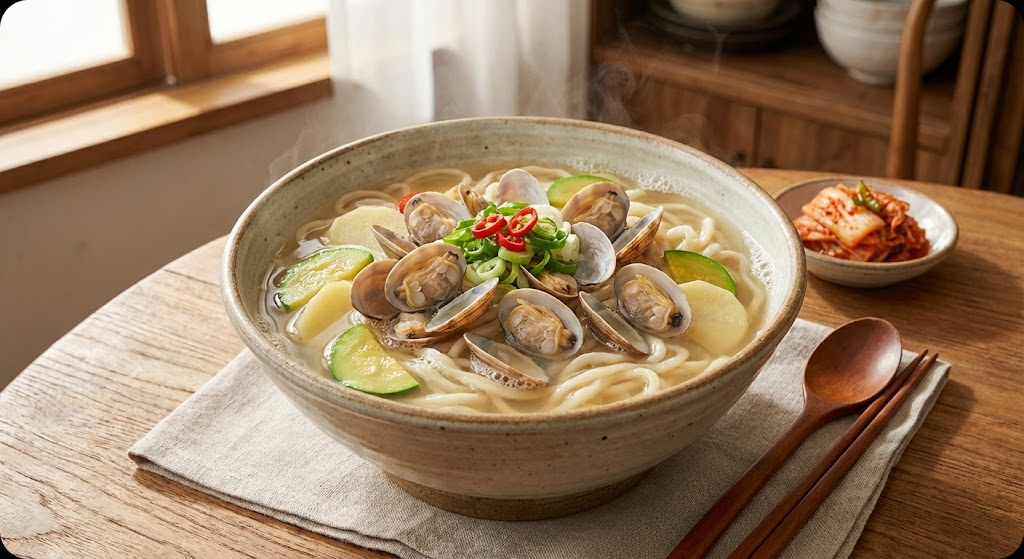
On a Rainy Day, Revive Your Appetite with This Amazing 바지락 칼국수 (Clam Noodle Soup)
Hello everyone! Welcome back, and thank you for following that delicious aroma to my blog today. The weather has suddenly turned quite chilly lately, and the sky has been looking pretty gloomy since this morning. On days like this, isn't a steaming bowl of hot soup the first thing that comes to mind? The combination of chewy noodles and that refreshing, clean clam broth is truly hard to resist!
Actually, I saw some incredibly fresh Manila clams at the market yesterday and brought home a whole bag. I thought to myself, "This is definitely a Kalguksu moment!" so I decided on it for today's lunch menu. While eating out is great, making it at home is even better because you can load up on seafood and, most importantly, adjust the seasoning perfectly to your taste. If you follow the recipe I'm sharing today, even beginners will be shocked, saying, "Wow, I actually made this?"
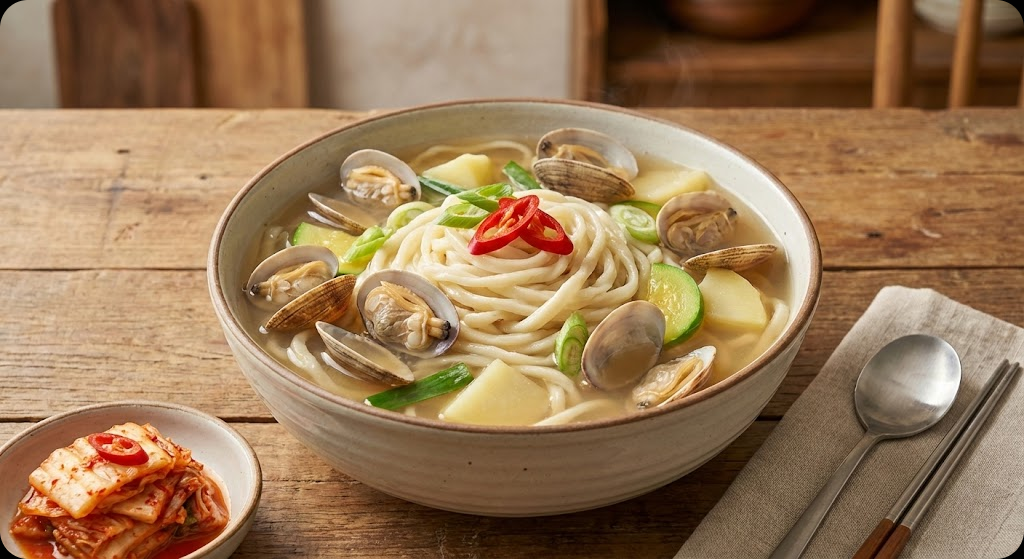
One of my friends who usually struggles with cooking tried this recipe and told me they got a huge "thumbs up" from their family. From tips on how to keep the broth clean and grit-free to achieving that deep umami flavor, I'll be sharing everything step-by-step. So, tie on your aprons and let's start this delicious home-cooking journey! It's seriously good, so you really have to try it!
Ingredients List (Serves 2)
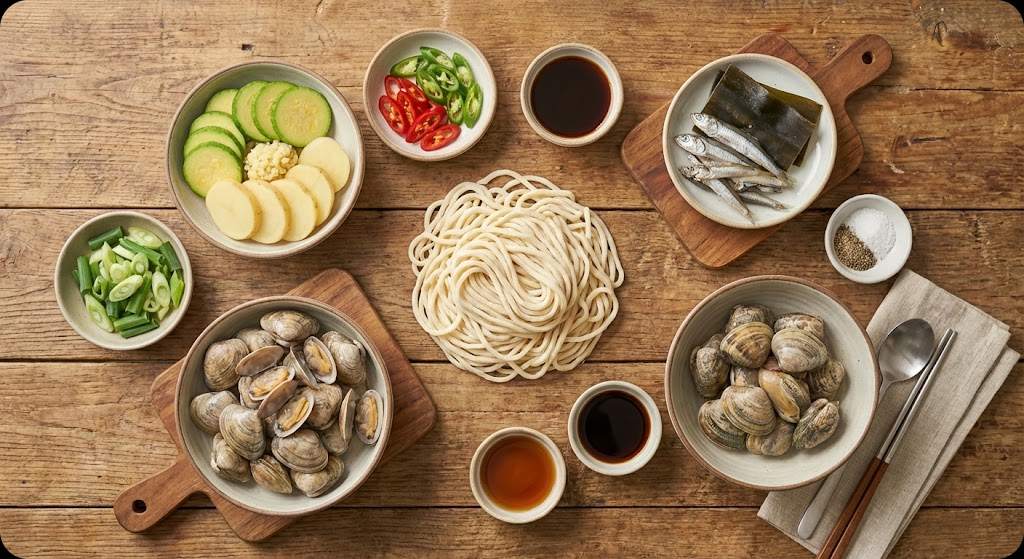
I've prepared ingredients that stay true to the basics while maximizing the flavor of the broth. You'll find these easily at any local market!
- Essential Ingredients: 1.1 lbs (500g) Manila clams (the more, the better!), 2 servings of fresh Kalguksu (knife-cut) noodles, 1/3 zucchini, 1 potato, 1/4 onion, 1/2 stalk scallion, 1 Cheongyang chili (optional for a spicy kick)
- Broth Ingredients: 6 cups (1.5L) water, 2 pieces of dried kelp (dashima), 10 large dried anchovies for soup (or 1 broth bag)
- Seasoning: 1 tablespoon minced garlic, 1 tablespoon soup soy sauce (Guk-ganjang), 1 tablespoon anchovy fish sauce (the secret to umami!), a pinch of salt, and a dash of black pepper
💡 Pro Chef's Ingredient Tips! How to Pick Clams: Fresh clams should have unbroken, glossy shells and stay tightly closed. It's okay if they are slightly open in water, but avoid them if they have a bad odor. Choosing Noodles: I highly recommend the "fresh Kalguksu" noodles found in the refrigerated section. They are much chewier and have a better texture than dried noodles. Substitutions: You can skip the potato if you don't have one, but the potato starch thickens the soup slightly, making the broth taste much more savory and rich.
The Cooking Process
For 바지락 칼국수, half the battle is sincerity and the other half is the ingredients. Follow these steps carefully, and you'll have a wonderful dish in no time!
Step 1: Purging the Clams (Haegam)
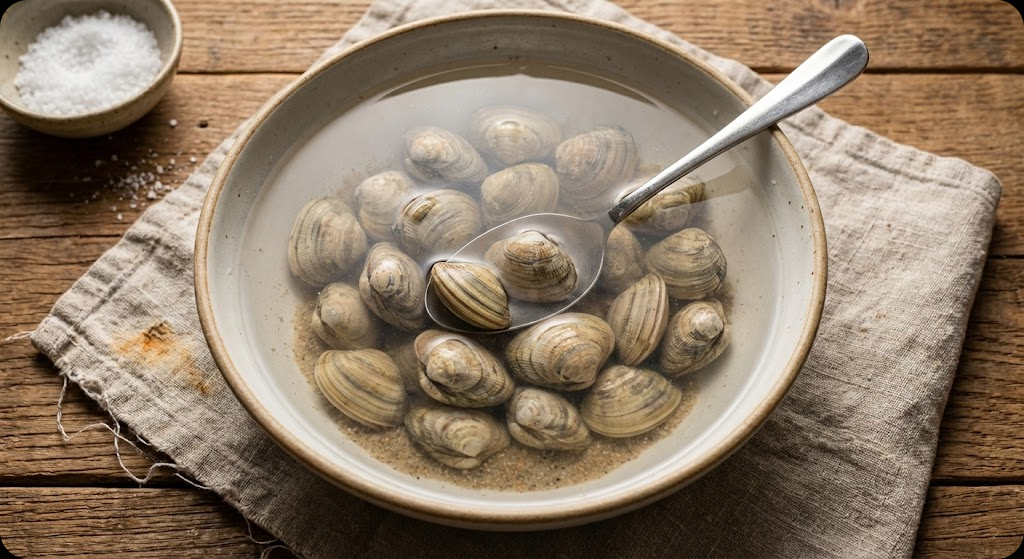
This is the most important first step! Soak the clams in salt water (about 2 tablespoons of salt per 1 liter of water). If you put a stainless steel spoon in the bowl and cover it with a dark plastic bag to keep it pitch black, the clams will think they're back in the mudflats and spit out any sand or grit. It's best to let them sit for at least 30 minutes to an hour.
Step 2: Making the Broth
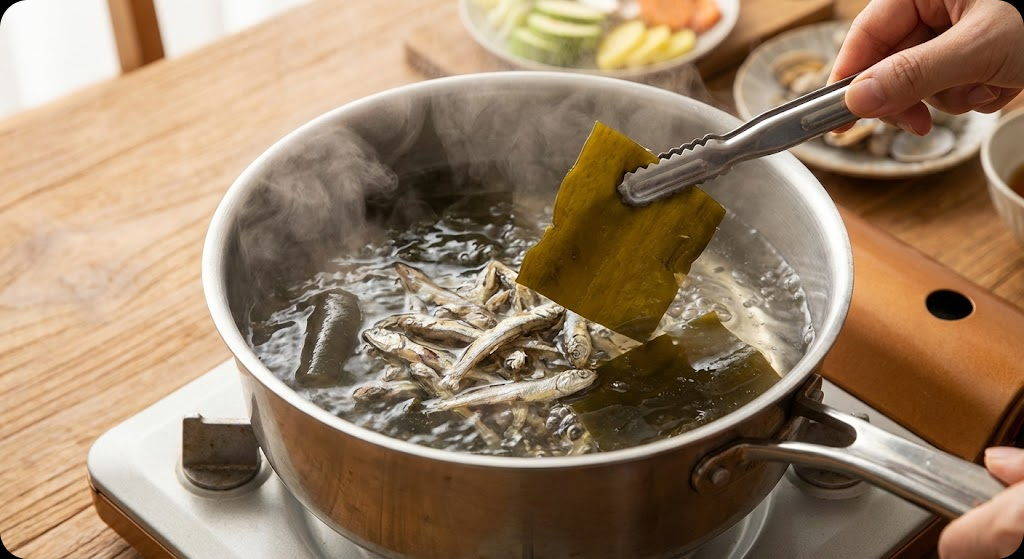
Put 6 cups of water in a pot along with the anchovies and kelp and bring to a boil. Once the water starts boiling, remove the kelp after 5 minutes to keep the broth from getting slimy. Let the anchovies simmer for another 10 minutes before removing them. If you're feeling lazy, using a store-bought broth bag is perfectly fine too!
Step 3: Prepping the Vegetables
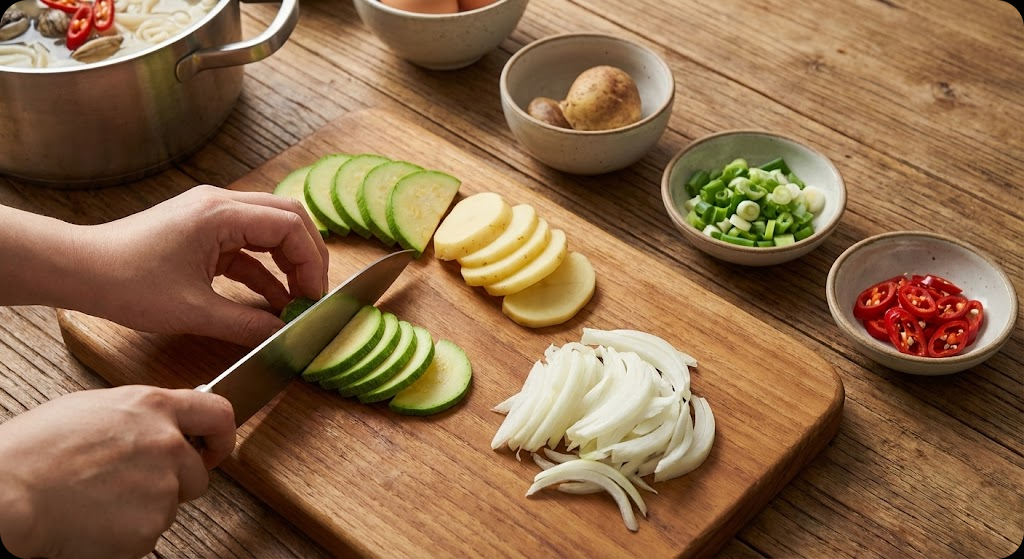
While the broth is simmering, prepare your veggies. Slice the potato and zucchini into half-moon shapes, and thinly slice the onion. Chop the scallions and chili pepper. Keeping the vegetables a similar size makes the dish look better and ensures even cooking.
Step 4: Boiling Potatoes and Onions First
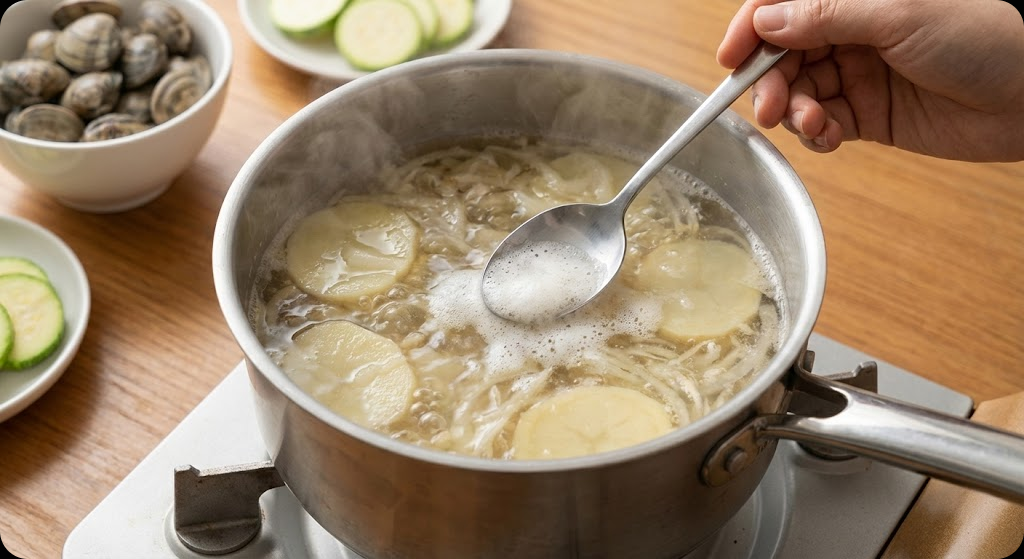
Add the firm potatoes and onions to the finished broth first. Boil until the potatoes are about halfway cooked (they will look slightly translucent). Use a spoon to skim off any foam that rises to the top for a much clearer broth.
Step 5: Preparing and Adding the Noodles
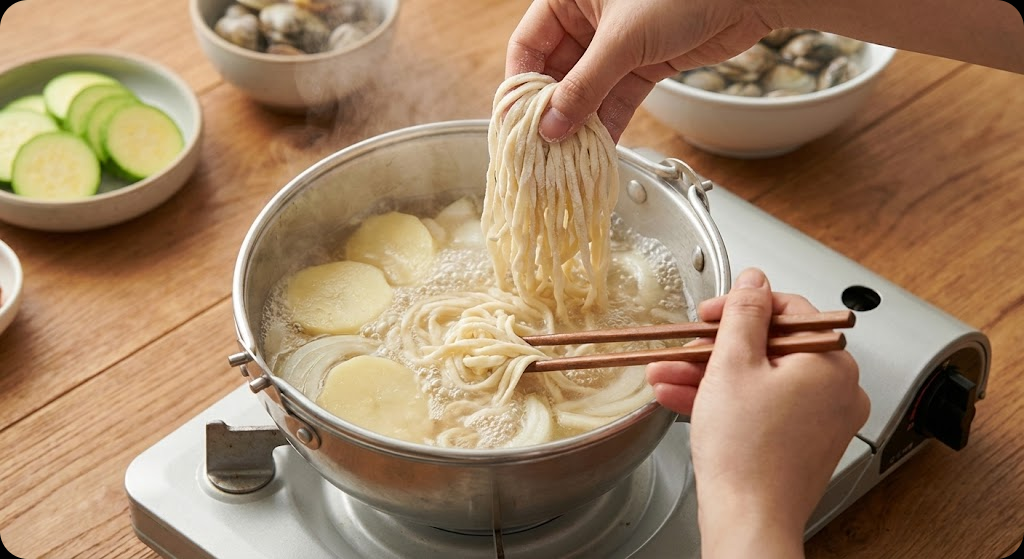
Fresh noodles are often covered in a lot of cornstarch. If you put them in directly, the soup will become too thick and muddy. Give them a quick rinse under running water or shake off as much excess powder as possible before adding them to the broth. Once the noodles are in, stir gently with chopsticks to keep them from sticking together!
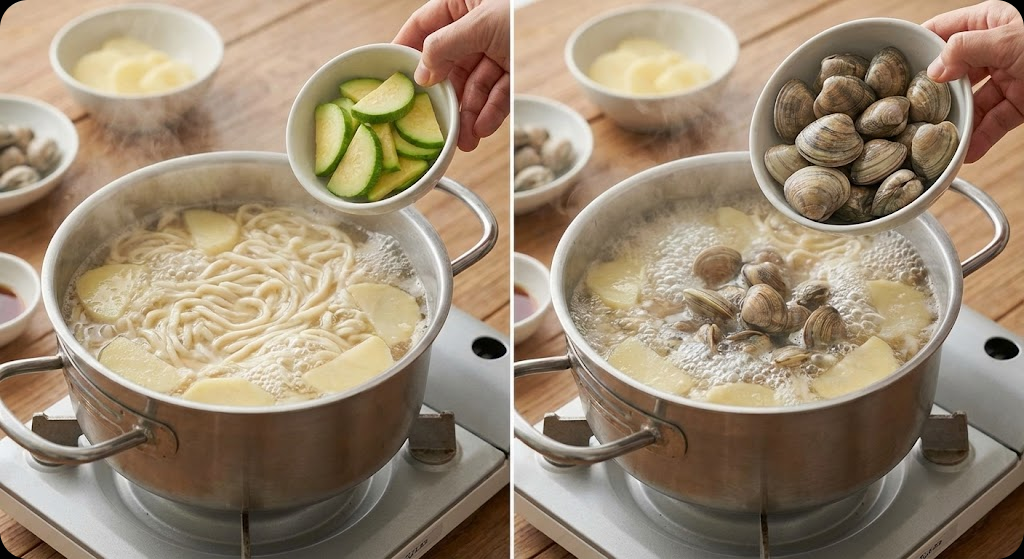
Step 6: Adding Clams and Zucchini
When the noodles are mostly cooked, add the purged clams and zucchini. Clams can get tough if boiled too long, so it's best to add them near the end. Boil just until the clams have opened their shells wide.
Step 7: Seasoning and Finishing
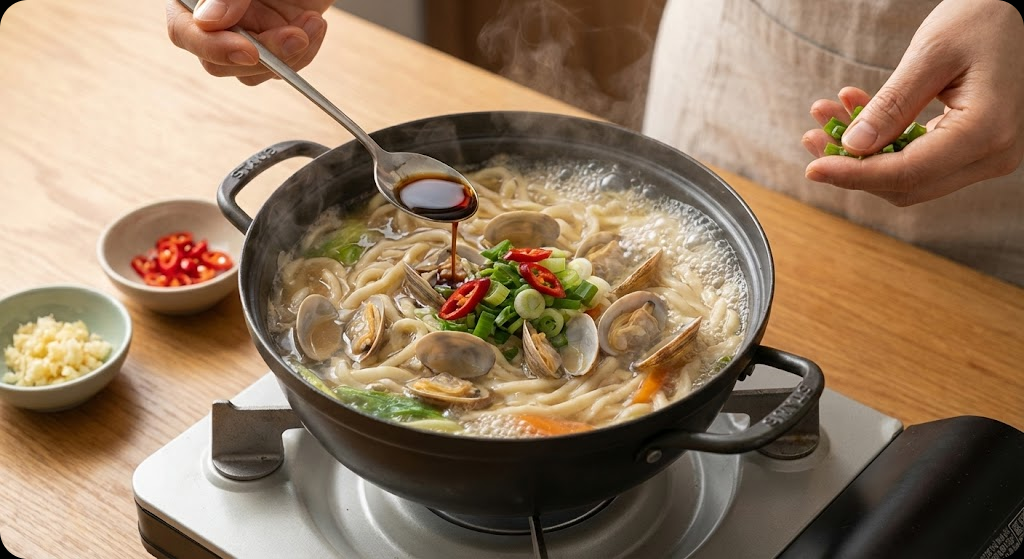
Add 1 tablespoon of minced garlic, 1 tablespoon of soup soy sauce, and the secret ingredient—1 tablespoon of anchovy fish sauce. The fish sauce is what gives it that deep, restaurant-quality flavor! Adjust the remaining salt to your preference, toss in the scallions and chili, and give it one last quick boil.
Plating and Enjoying
Place the noodles in a large bowl first, pile the clams generously on top, and pour plenty of broth over it. The green zucchini and red peppers will make it look professional! Pair this with some freshly made Geotjeori (fresh kimchi) or well-ripened Kkakdugi (radish kimchi), and you won't need any other side dishes.
If you want a bit more of a kick, try making a "Dadaegi" (spicy paste) by mixing red pepper flakes, soy sauce, and chopped green onions to add on top. It offers a completely different charm from the clean, original flavor.
Honest Cooking Review
Homemade 바지락 칼국수 really has a different depth of broth. The moment I took a sip, I instinctively went, "Ahhh, so refreshing!" The noodles are chewy, and the clam meat is plump, making every bite fun. It's a flavor that isn't overwhelming but keeps you coming back for more until the bowl is empty.
If you have any broth left over, don't throw it away! The next day, add a bit of cold rice and a beaten egg to boil it into a porridge. It’s an absolute delicacy! Since the noodles can get soggy, I recommend eating it all on the day you make it. Experience the happiness of sitting down with your family over a hot bowl of Kalguksu this weekend. I'm definitely going to make this again!