The Ultimate Korean Food Guide: Comforting Biji-jjigae Soybean Stew Recipe 🍳
🌨️ Warm and Savory Rice Thief! Fail-proof Ground Soybean Stew Golden Recipe 🍲Hello everyone~! The weather suddenly got so cold today, right?
🌨️ Warm and Savory Rice Thief! Fail-proof Ground Soybean Stew Golden Recipe 🍲
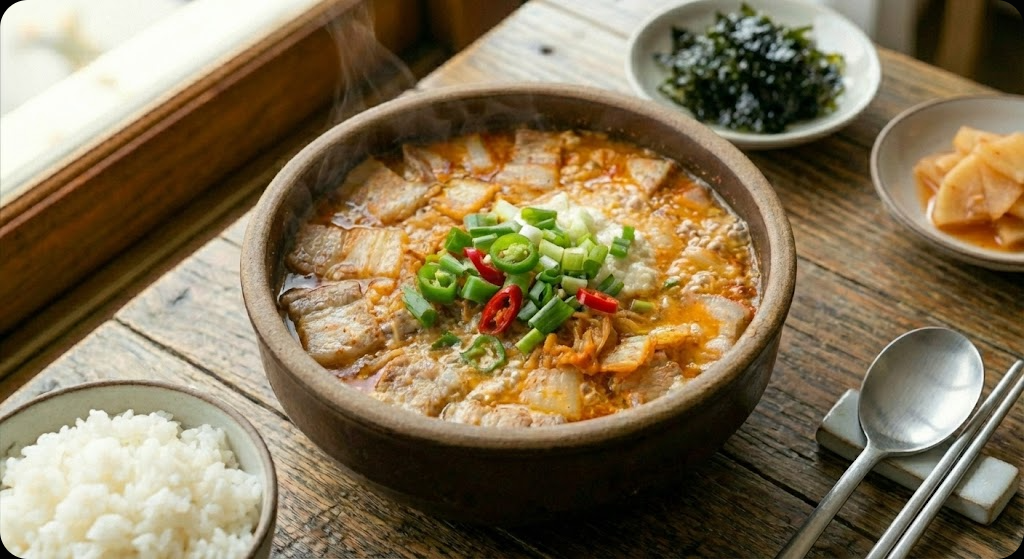
Hello everyone~! The weather suddenly got so cold today, right? T_T When the cold wind starts blowing like this, there's a certain home-cooked menu that comes to mind. It's the bubbling, savory ground soybean stew! Actually, I used to be a picky eater as a kid and didn't like ground soybeans much. But as I get older, I don't know why I keep thinking of this savory taste. Haha.
Not long ago, when friends visited my home, I treated them with this ground soybean stew recipe with great determination, and everyone finished two bowls of rice saying, "Isn't this sold at a restaurant?" Even beginner cooks can definitely succeed if you follow my tips for making ground soybean stew. Well then, shall we start cooking in earnest? ✨
🛒 Ingredient Preparation (For 2 People)
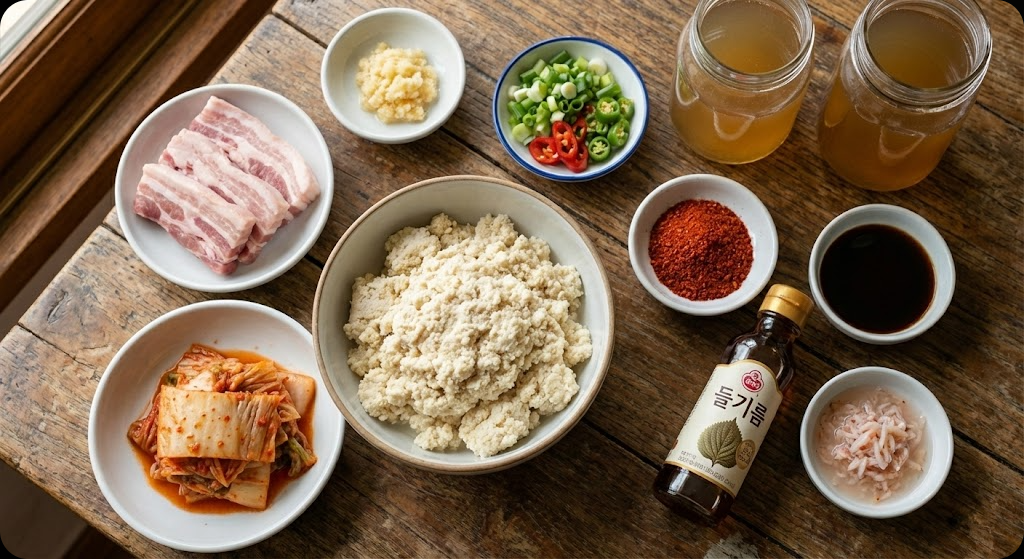
The most important thing that determines the taste of ground soybean stew is indeed the golden ratio! Let's check the ingredients carefully.
- Essential Ingredients: 300g ground soybeans (Store-bought is OK!), 150g pork (for stew/pork shoulder recommended), 1/4 head of sour kimchi, 1/2 green onion, 1 cheongyang chili pepper
- Seasoning Ingredients: 2 tbsp perilla oil, 1 tbsp minced garlic, 1.5 tbsp red chili powder, 1 tbsp soup soy sauce, 0.5~1 tbsp salted shrimp (for salt adjustment), 400ml anchovy kelp broth
- Optional Ingredients: Red chili pepper (for color), 1/4 onion
💡 Cooking Tip! You must! Use sour kimchi for a perfect match with the savory taste of the ground soybeans. If the kimchi is not ripe enough, adding about half a tablespoon of vinegar will bring out the umami. Pork with a moderate amount of fat is much softer and more delicious!
👩🍳 Cooking Order (Step-by-Step)
Step 1. Prepping Ingredients
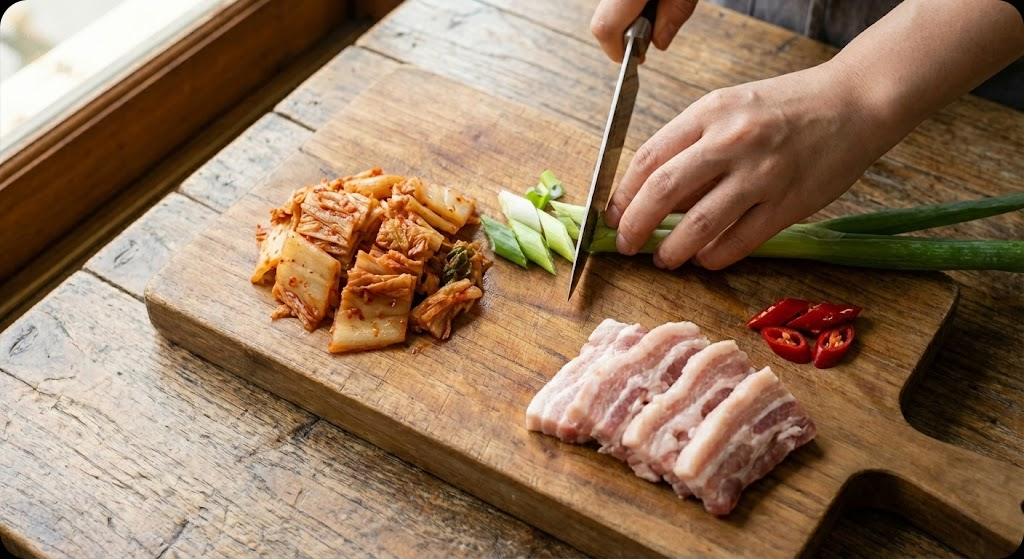
First, lightly wipe the blood off the pork with a kitchen towel. You need to wipe the blood well to make a clean ground soybean stew without any gamey smell! Slice the sour kimchi into bite-sized pieces, and prepare the green onion and chili peppers by slicing them diagonally. If you're adding onions, shred them and set aside. Half the work is already done! Haha.
Step 2. Stir-frying Meat in Savory Oil
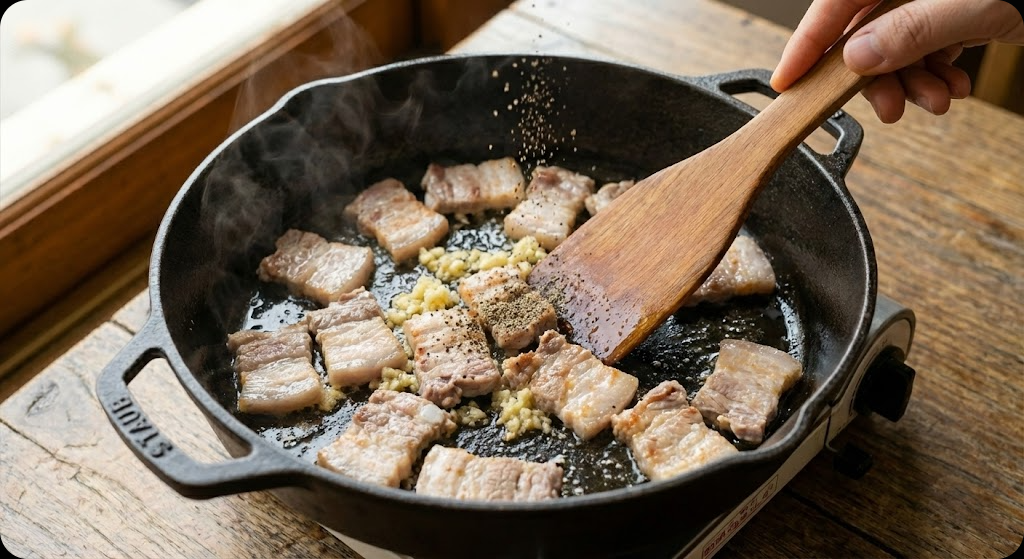
Add 2 tbsp perilla oil to a pot and stir-fry the minced garlic and pork first. Keep the heat at medium! The point is to stir-fry until the surface of the meat turns white and the savory perilla oil scent fills the kitchen. At this time, sprinkling black pepper about twice will really bring out the flavor.
Step 3. Adding Kimchi and Stir-frying Thoroughly
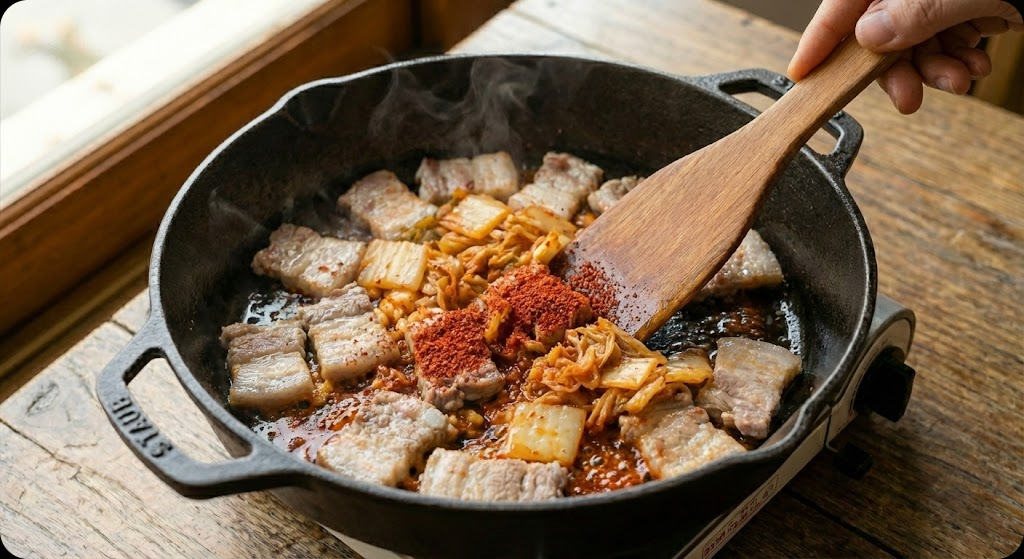
Once the meat is somewhat cooked, add the sliced sour kimchi. It's important to stir-fry it sufficiently with the meat until the kimchi becomes transparent! Stir-frying the kimchi well deepens the soup flavor. Add 1.5 tbsp red chili powder here and stir-fry for about 1 more minute without burning it, and a beautiful chili oil will form, completing the appetizing visual! 😍
Step 4. Pouring Broth and Boiling
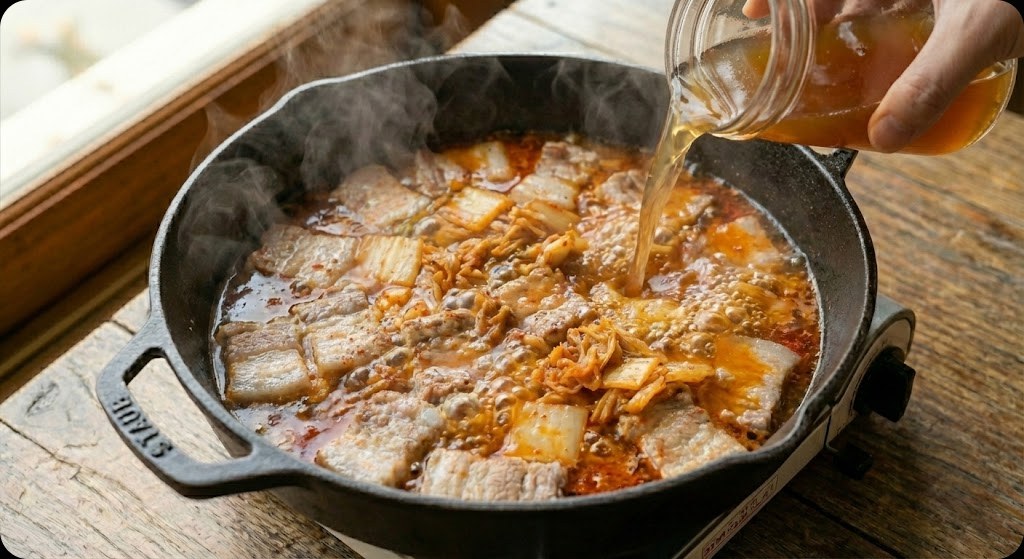
Now pour in 400ml of anchovy kelp broth. If you don't have broth, rice water is also great! Turn the heat to high and bring it to a boil. When the soup starts boiling, reduce to medium-low heat and simmer gently for about 5 minutes to let the kimchi flavor fully infuse into the broth.
Step 5. Adding Ground Soybeans and Seasoning
Add the star of today, the ground soybeans! It's best not to stir too much after adding the soybeans. Loosen them gently so they spread out in fluffy clumps. Now it's time to taste, and seasoning with salted shrimp is my own golden ratio secret! It gives a much deeper flavor than salt. Add or subtract salted shrimp and soup soy sauce to suit your taste.
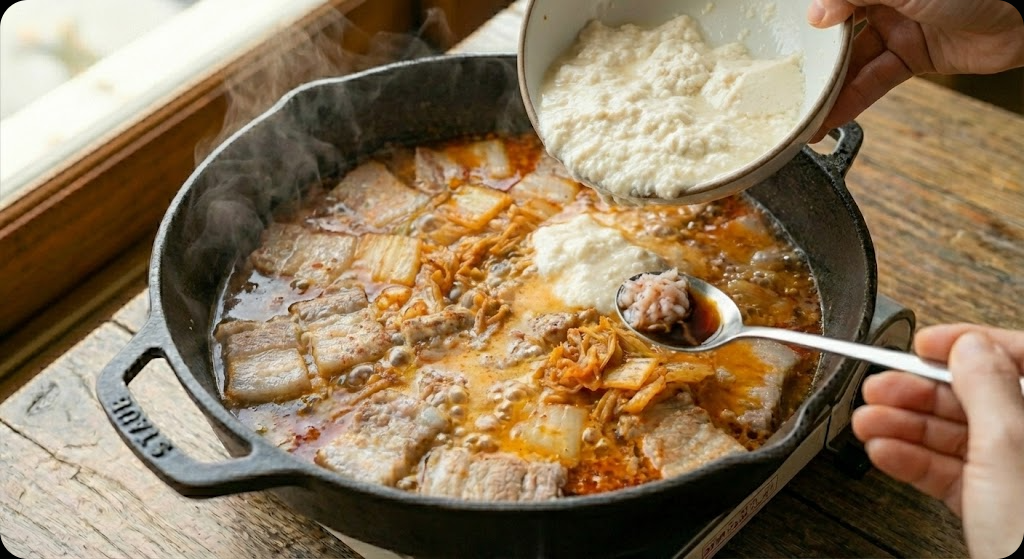
Step 6. Adding Vegetables and Finishing
Finally, add the sliced green onion, cheongyang chili pepper, and red chili pepper and boil for 1-2 more minutes, and you're done! Once the ground soybeans are in, the soup thickens quickly, so stir once in a while so the bottom doesn't burn. It's a moment of happiness just hearing it bubble! 🧡
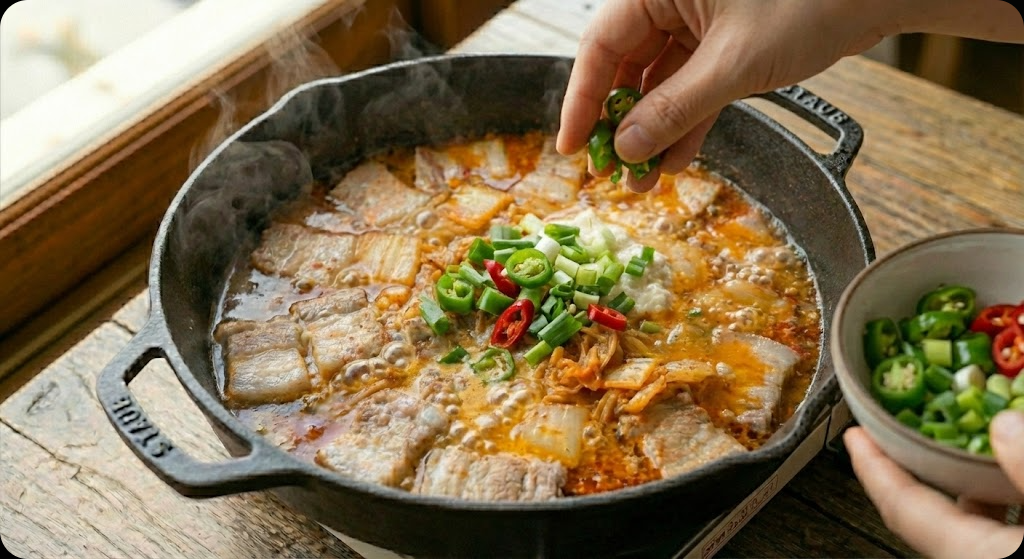
✨ Plating & How to Eat Deliciously
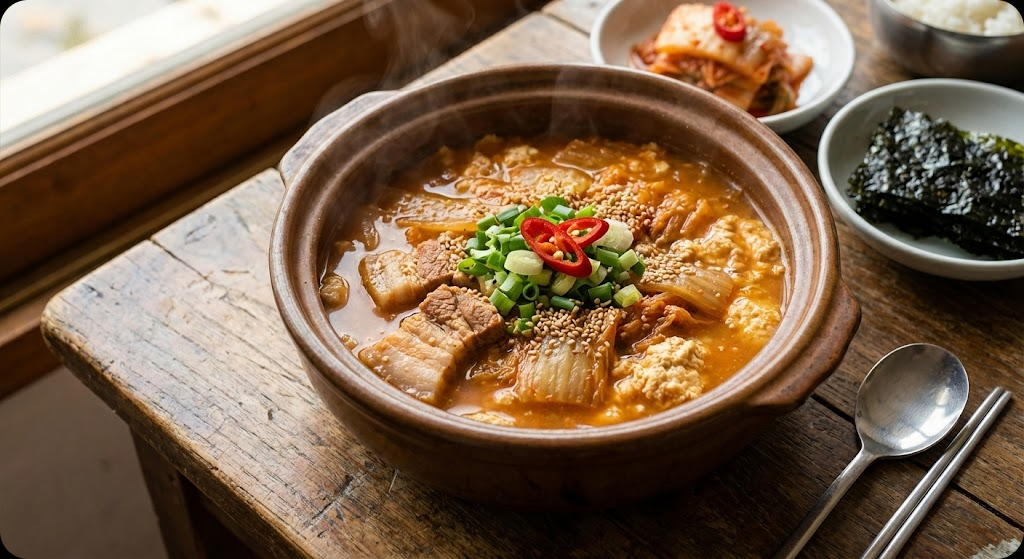
If you transfer the completed ground soybean stew to an earthenware pot, the warmth is maintained for a long time, so you can enjoy it warm until the end. If you add a bit more green onion on top and sprinkle sesame seeds, the visual is absolutely amazing, right? Haha.
You know it's a rule to mix ground soybean stew into freshly cooked white rice, right? With just some crispy roasted seaweed or salty perilla leaf pickles, you don't need any other side dishes. The savoriness of ground soybeans filling your mouth, the chewiness of the pork, and the refreshing taste of the sour kimchi! You really have to try this T_T.
📝 Honest Review & Closing
Today I introduced a ground soybean stew recipe that anyone can easily follow, and it's really simple, right? Sometimes store-bought ground soybean stew is too salty or tastes artificial, but it's so great to make it at home because you can produce a clean yet deep flavor. If you store the leftover stew in the fridge and boil it again the next day, the taste becomes deeper and even more delicious! (Stews are always better the next day, whisper whisper..)
For those living with family or alone, definitely give it a try when you miss a hearty home-cooked meal! You'll naturally say, "It's really delicious!" Have a delicious meal today, and if my recipe was helpful, please leave a like and a comment~! I'll be back with another delicious recipe next time. Bye! 👋