🥗 Fresh & Crunchy Korean Food: 봄동 겉절이 (Spring Napa Cabbage Fresh Kimchi) Recipe
Hello!
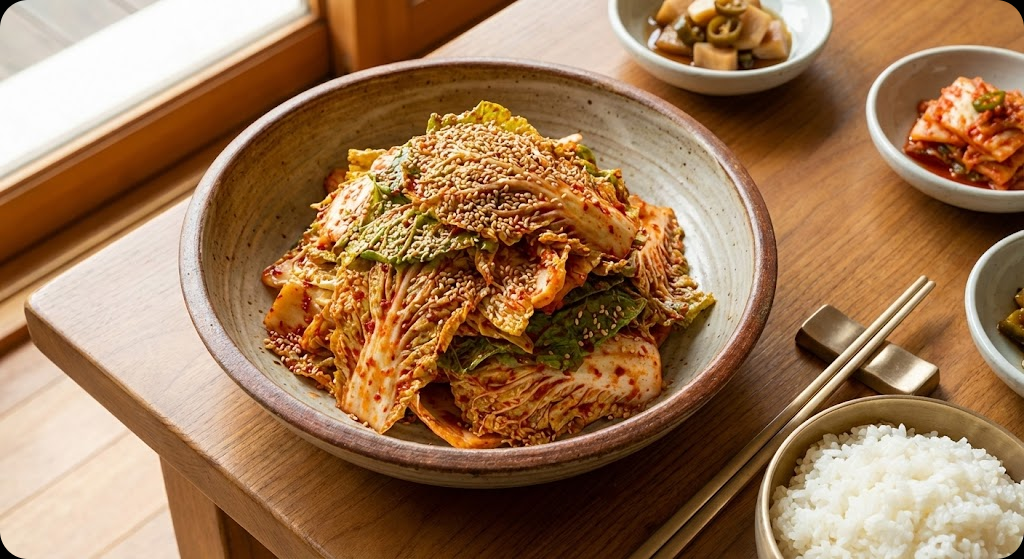
Hello! With the scent of spring already in the air, I’m back with a recipe that’s sure to wake up your appetite!
Hi everyone, hasn't the weather been getting so much warmer lately? As the seasons change, my body feels a bit sluggish, and I've been craving something refreshing and crunchy. Yesterday, while grocery shopping, I found a pile of Bomdong (Spring Napa Cabbage) shyly showing off its yellow hearts! I immediately grabbed a head, thinking, "I absolutely have to buy this!" After a winter of eating mostly aged kimchi and heavy stews, seeing these vibrant green leaves makes my heart feel like it's already spring, don't you think?
The dish I’m introducing today is 봄동 겉절이 (Bomdong Geotjeori)—a fresh, unfermented kimchi salad. It's a magical recipe that makes everyone ask, "Oh my, how did you season this?" when you serve it alongside grilled meat for friends or family. You can finish it in just 10 minutes without any complex steps, so I guarantee success even for beginner cooks! Shall we dive into the world of crunchy Bomdong Geotjeori together?
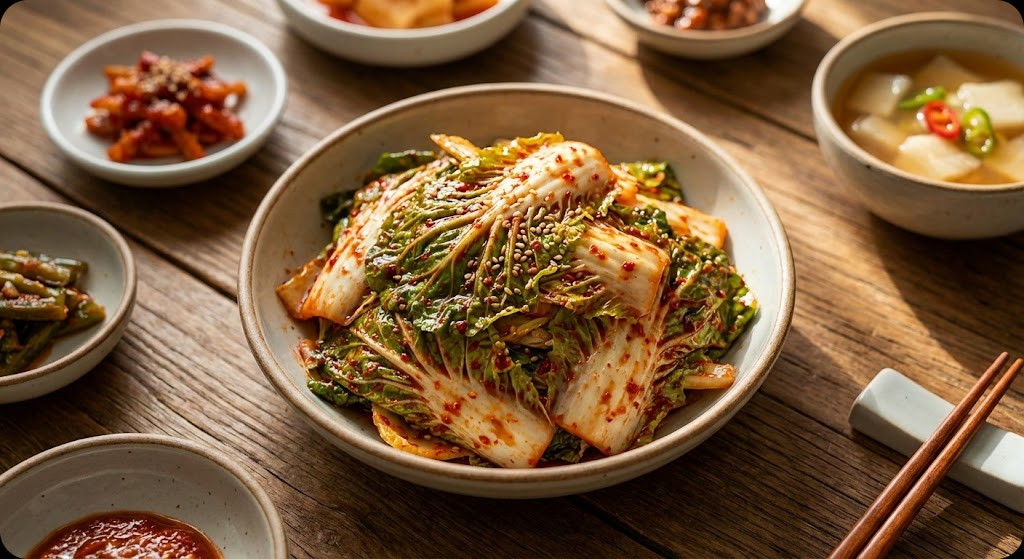
Why Bomdong Geotjeori?
Bomdong is much sweeter and has a crunchier texture than regular Napa cabbage. It’s packed with Vitamin C and calcium, making it the perfect remedy for that sleepy springtime fatigue (Chungonjeung). Best of all, the charm of Geotjeori lies in eating it right after tossing, draped over a spoonful of warm rice before the leaves lose their crispness. Today’s recipe focuses on the "Golden Ratio" of the seasoning sauce, so stay tuned until the end!
Fresh Ingredients (Serves 2)
Half of a successful dish starts with fresh ingredients. Let's take a close look at what we need!
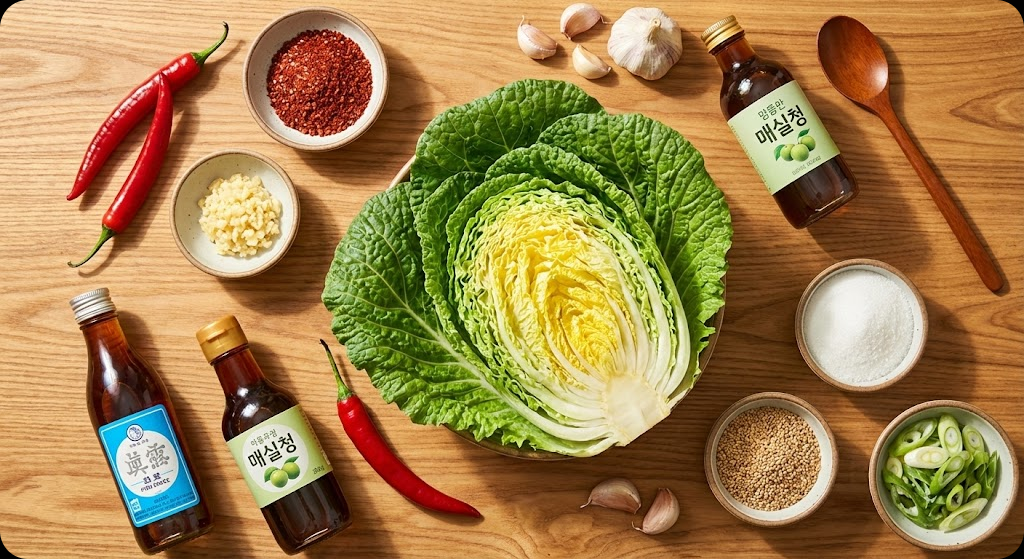
Essential Ingredients
- Bomdong (Spring Cabbage): 1 head (approx. 250–300g)
- Gochugaru (Korean red chili flakes): 3 tbsp (Adjust based on your preferred color and spice level)
- Fish Sauce: 2 tbsp (Anchovy or sand lance sauce both work!)
- Plum Extract (Maesil-cheong): 1.5 tbsp (The key to sweetness and umami!)
- Minced Garlic: 1 tbsp (It’s tastier if you add a generous amount)
- Sugar: 0.5 tbsp
- Toasted Sesame Seeds: 1 tbsp
Optional Ingredients (Highly recommended!)
- Green Onions or Scallions: A small handful
- Sesame Oil: 1 tbsp (If you want to maximize the nuttiness)
- Carrot: A little bit (Adds a lovely pop of color)
Pro Blogger's Tip! ✨ A good Bomdong has leaves that spread out wide and a heart that is bright yellow—these are much sweeter and nuttier. If the outer leaves are too dark green, they might be a bit tough, so try to pick one with a bright, vibrant color!
How to Make Crunchy 봄동 겉절이
Step 1. Prepping the Bomdong
First, you need to clean the cabbage properly. Dirt often hides near the root of Bomdong. Simply cut off the root base with a knife, and the leaves will naturally separate. For large leaves, tear them lengthwise into bite-sized pieces or slice them diagonally. The key is not to cut them too small so you can really enjoy that crunchy texture!
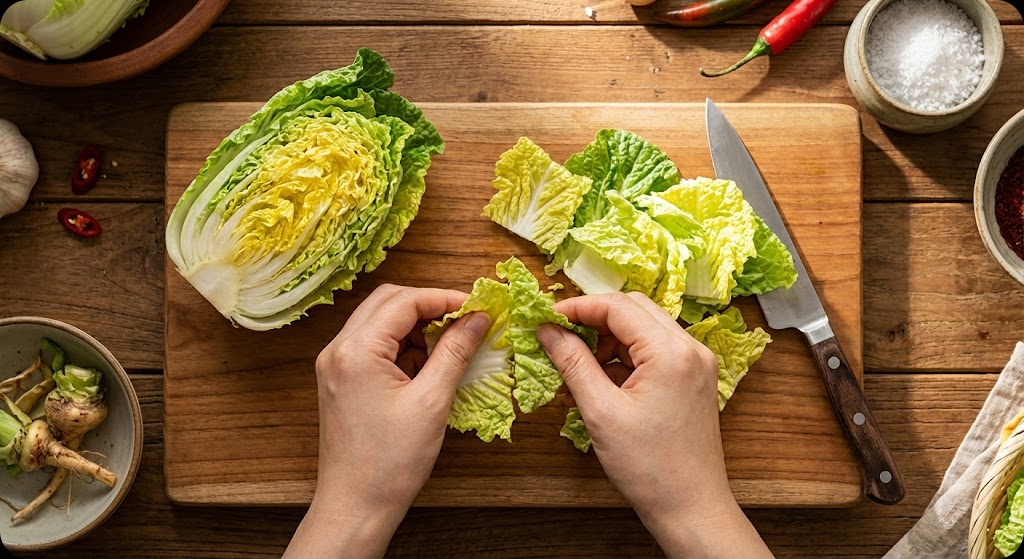
Step 2. Washing and Drying Thoroughly
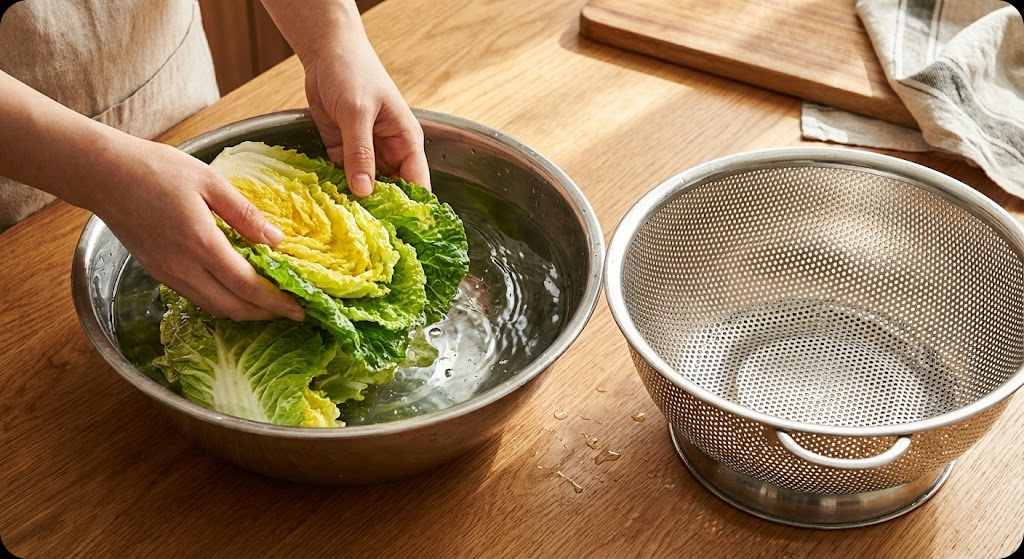
Rinse the prepped Bomdong 2 or 3 times in cold water, swishing it around to remove any hidden grit. Here is a crucial tip: After washing, make sure to let it drain in a colander to remove all excess moisture. If the leaves are too wet, the seasoning will get watered down and won't stick properly. If you're in a hurry, using a salad spinner is a great idea!
Step 3. Making the Golden Ratio Sauce
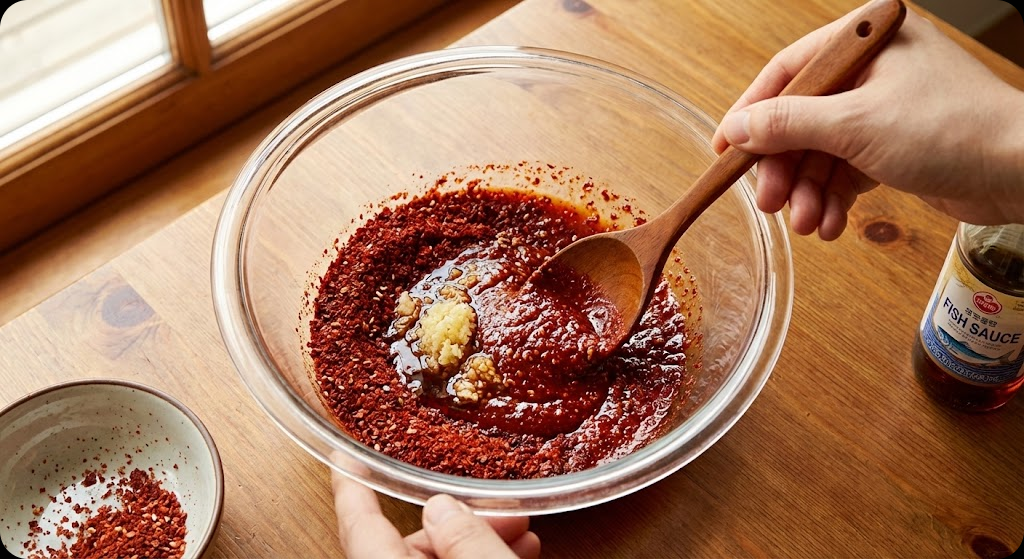
Now for the most important part—the seasoning sauce. In a large bowl, combine 3 tbsp Gochugaru, 2 tbsp Fish Sauce, 1.5 tbsp Plum Extract, 1 tbsp Minced Garlic, and 0.5 tbsp Sugar. Mix well. If you let the sauce sit for about 5 minutes, the chili flakes will hydrate, resulting in a much more vibrant color and a smoother taste. I like to mix in about half of the sesame seeds at this stage too.
Step 4. Tossing Gently
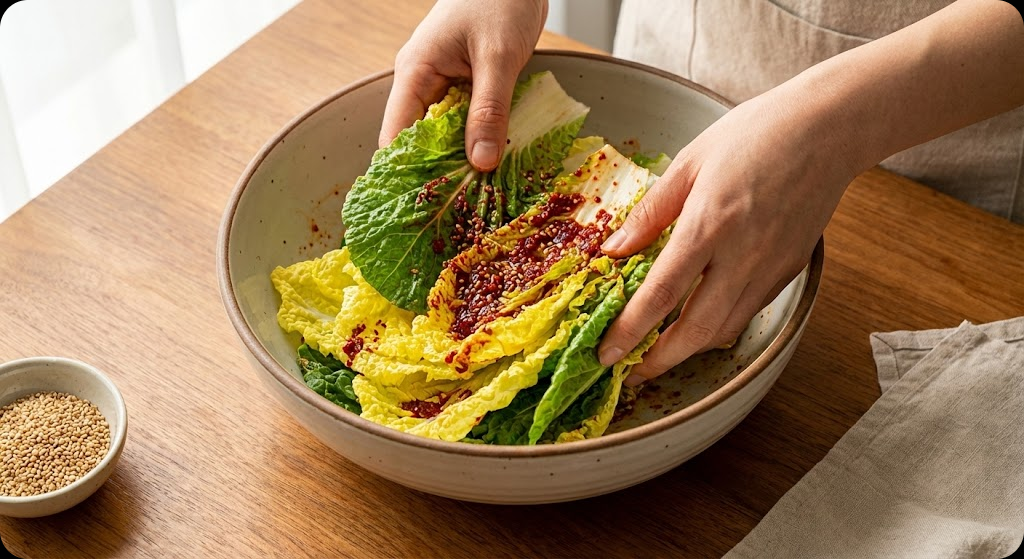
Add the drained Bomdong to the bowl with the sauce. Be careful here! If you rub or press too hard, the cabbage can develop a "grassy" (put-nae) smell. Treat the leaves gently, like you're handling a baby, and toss them lightly with your fingertips to coat them in the sauce. If you have carrots or onions ready, add them in now.
Step 5. The Final Savory Touch
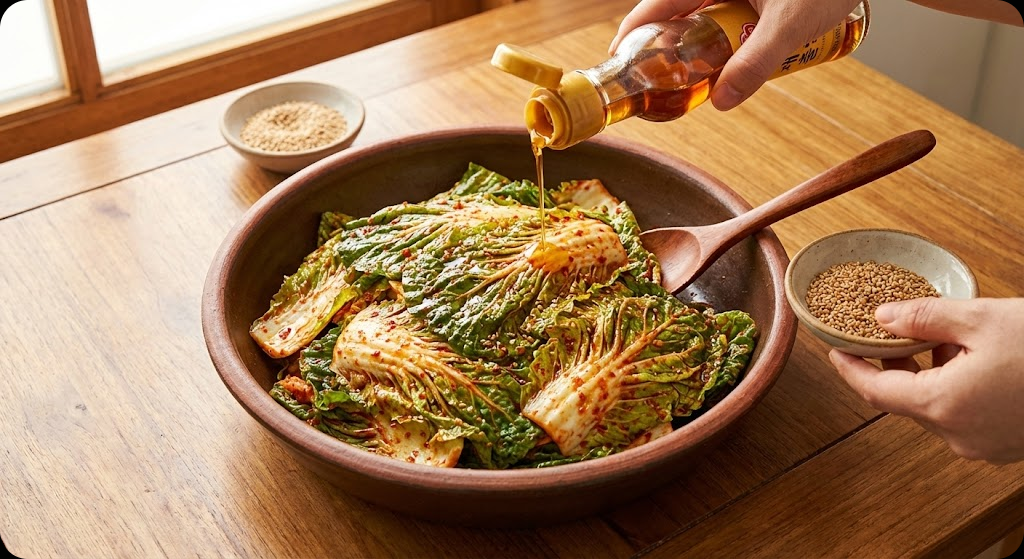
Once the red seasoning is evenly distributed, give it a quick taste. If it's a bit bland, add a tiny splash of fish sauce. To finish, drizzle 1 tbsp of sesame oil. Geotjeori tastes so much more appetizing with that hint of toasted sesame aroma! Sprinkle the remaining sesame seeds on top, and you’re done.
Plating & Tips for the Best Flavor
When serving, try to pile the Bomdong Geotjeori high on a shallow plate. The contrast between the bright green and deep red will instantly stimulate your appetite. As you know, Geotjeori is best eaten immediately after tossing! While it’s heavenly over warm white rice, I personally highly recommend pairing it with Samgyeopsal (Pork Belly) or Kalguksu (Hand-cut Noodle Soup). The refreshing cabbage perfectly cuts through the richness of the meat.
If you're preparing this for guests, try sprinkling a little pine nut powder or adding a few strands of sil-gochu (shredded red pepper) on top. It will transform the dish into a high-end Korean traditional side dish!
Honest Review and Storage
After making and eating this myself, I can definitely say that seasonal vegetables really are the best medicine. With every bite, the natural sweetness of the Bomdong and the spicy-tangy sauce worked so well together that I finished a whole bowl of rice in no time. Instead of saying, "I think I'll make this again," I'm actually planning to make it again tomorrow! (Laughs)
Storage Tip: Geotjeori has high moisture content, so water will eventually release and the leaves will lose their crunch over time. It’s best to toss only as much as you can eat in one sitting. If you have leftovers, store them in an airtight container in the fridge and eat within 1–2 days. But honestly, it’s so delicious that there probably won’t be any left!
Was today's recipe helpful? Why not pick up a head of Bomdong at the market this weekend and bring a little spring to your dining table? If you have any questions, feel free to leave a comment. Have a delicious day! ❤️