Korean Food: The Ultimate Dakdoritang (Spicy Braised Chicken) Recipe
Hello there!
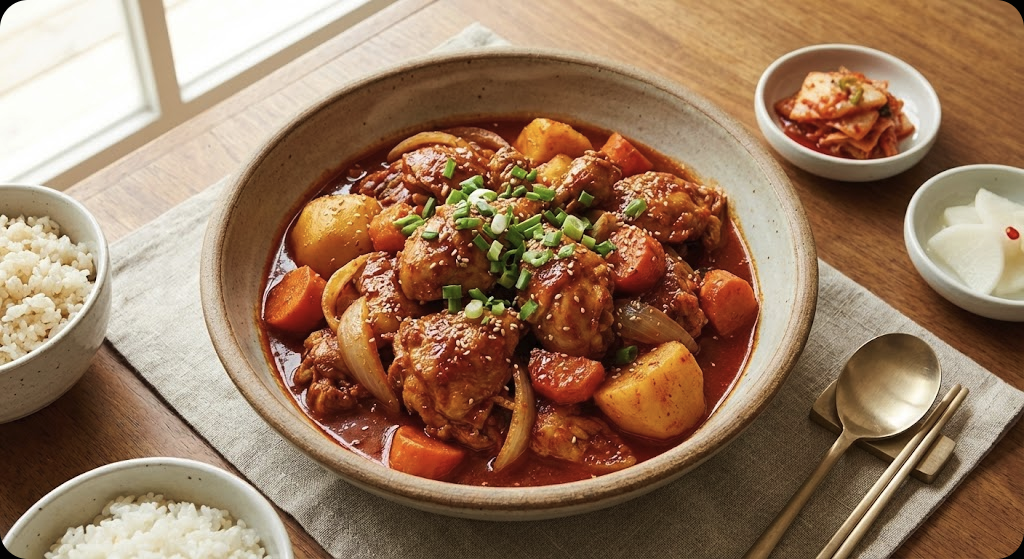
Hello there! Today, I'm sharing my recipe for the "Best Dakdoritang of Your Life" that you can make right at home ✨
The weather has suddenly turned chilly lately, hasn't it? Whenever it gets like this, I automatically crave spicy, hearty soup dishes. Especially on my way home from work, if I catch a whiff of something spicy, I think, "Ah, tonight definitely calls for Dakdoritang!" Honestly, eating this out can be surprisingly expensive, and it's harder than you think to find a place with a sauce that perfectly suits my taste.
So today, after countless trials and errors, I'm finally revealing my Golden Ratio Dakdoritang Recipe that has a 0% failure rate! It's one of the menus my friends always beg me to make whenever they come over to my place. Even cooking beginners can achieve a deep, restaurant-quality flavor if you just follow along step-by-step—you'll be asking yourself, "Did I really make this?" Let's start this recipe right now that looks and tastes just like it came from a pro kitchen!
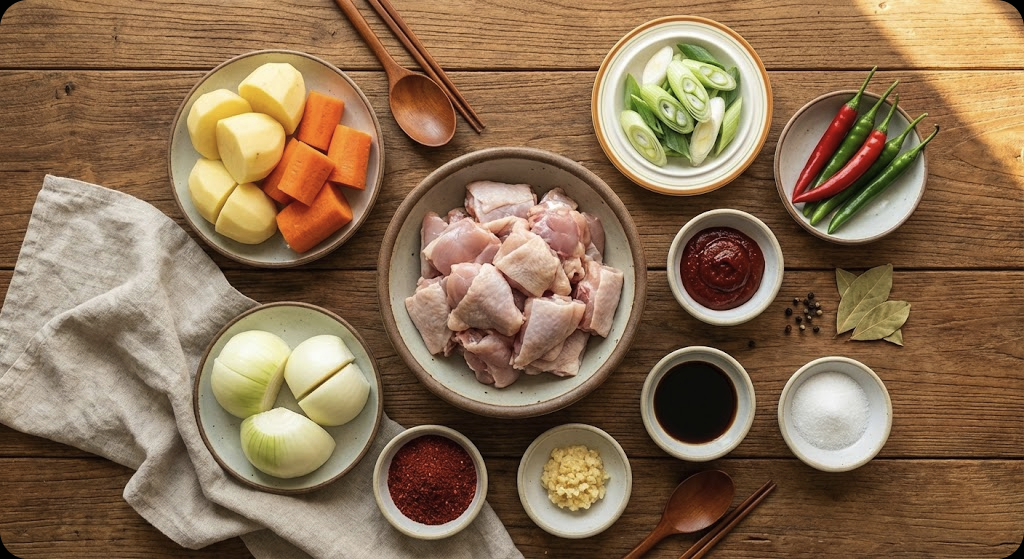
🛒 Ingredients Preparation (Serves 2)
The ingredients are things you can easily find at your local market. If you have fresh chicken ready, you're already halfway there!
- Essential Ingredients: 1 whole chicken cut for braising (approx. 600-800g / 1.3-1.7 lbs), 2 potatoes, 1 onion, 1 large green onion stalk, 2 spicy chili peppers (like Cheongyang or jalapeño)
- Optional Ingredients: 1/3 carrot, a handful of Tteokbokki rice cakes, glass noodles (soak in water beforehand!)
- Seasoning Sauce Ingredients (based on standard tablespoons): 2 Tbsp Gochujang (Korean chili paste), 4 Tbsp Gochugaru (Korean chili flakes), 5 Tbsp Soy sauce, 2 Tbsp Sugar, 2 Tbsp Minced garlic, 1 Tbsp Oligosaccharide (or corn syrup/honey), 2 Tbsp Mirin (cooking wine), A few shakes of black pepper
💡 Cooking Tips! When choosing chicken, fresh ones have pinkish flesh and feel firm and elastic. You can use Stevia instead of sugar, but for that appetizing glossy sheen, you really need to add the oligosaccharide or corn syrup! If you cut the potatoes too small, they will crumble later and make the broth murky, so the key is to cut them into large chunks.
👩🍳 Cooking Process: The Golden Recipe in 6 Steps
Shall we start cooking for real now? Just controlling the heat well will elevate the quality of your dish.
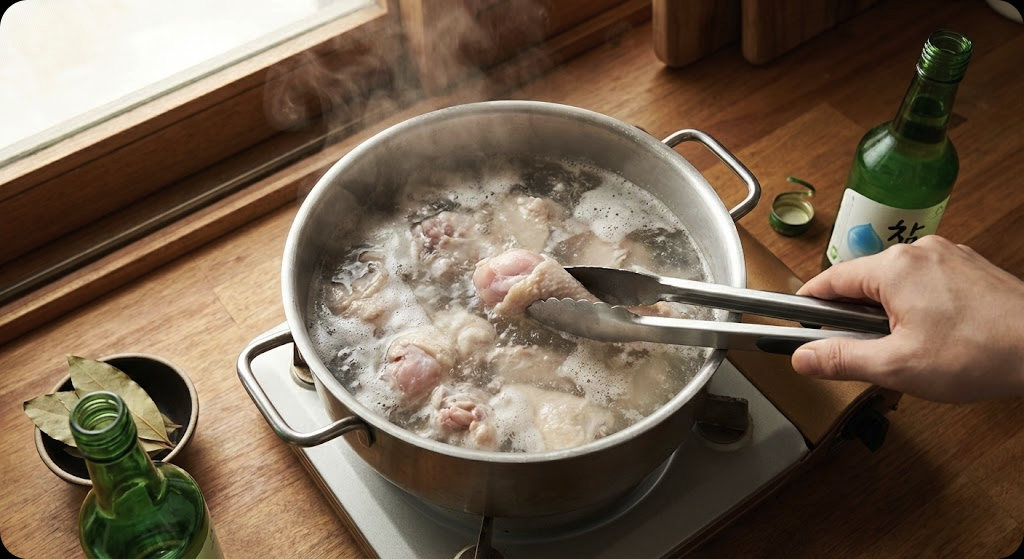
Step 1. Cleaning the Chicken and Removing Odors
First, wash the chicken thoroughly in clean water. You need to wipe away any blood stuck between the bones so it doesn't smell gamey. Next, put the chicken in boiling water and blanch it lightly for about 3-5 minutes. If you add bay leaves or a shot of soju (or vodka) at this time, you can completely eliminate any bad smells! Rinse the blanched chicken in cold water to remove any impurities.
Step 2. Pre-mix and Age the Seasoning Sauce
The life of Dakdoritang is the sauce! In a bowl, add 2 Tbsp Gochujang, 4 Tbsp Gochugaru, 5 Tbsp Soy sauce, 2 Tbsp Sugar, 2 Tbsp Minced garlic, 1 Tbsp Oligosaccharide, 2 Tbsp Mirin, and black pepper, then mix well. If you mix this before starting to cook, the chili flakes will expand, making the color prettier and the flavors more harmonious.
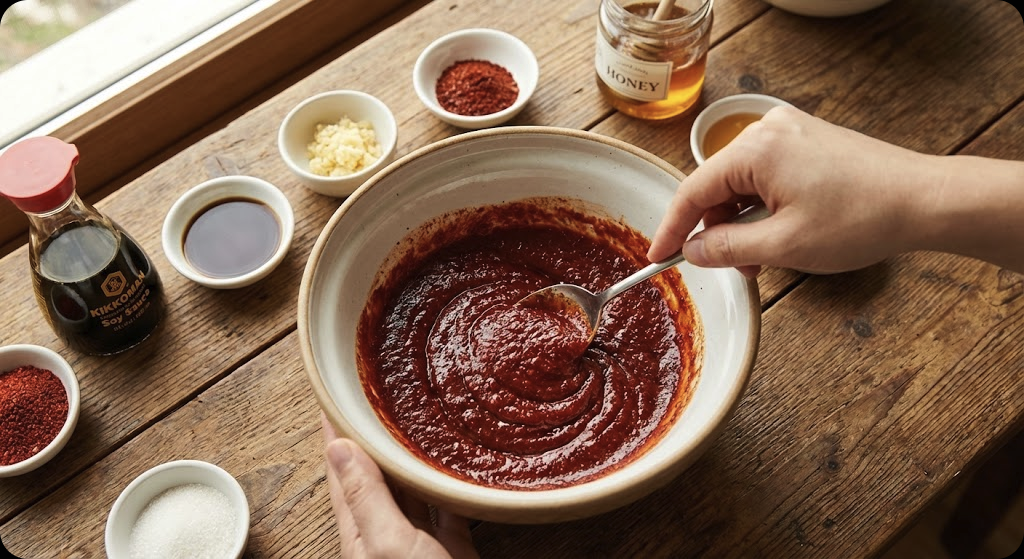
Step 3. Prepping the Vegetables
Cut the potatoes and carrots into large chunks. A great tip is to shave down the sharp corners to make them round; this prevents the veggies from breaking apart even when boiled for a long time, keeping the broth clean. Quarter the onion, and slice the green onions and chili peppers diagonally.
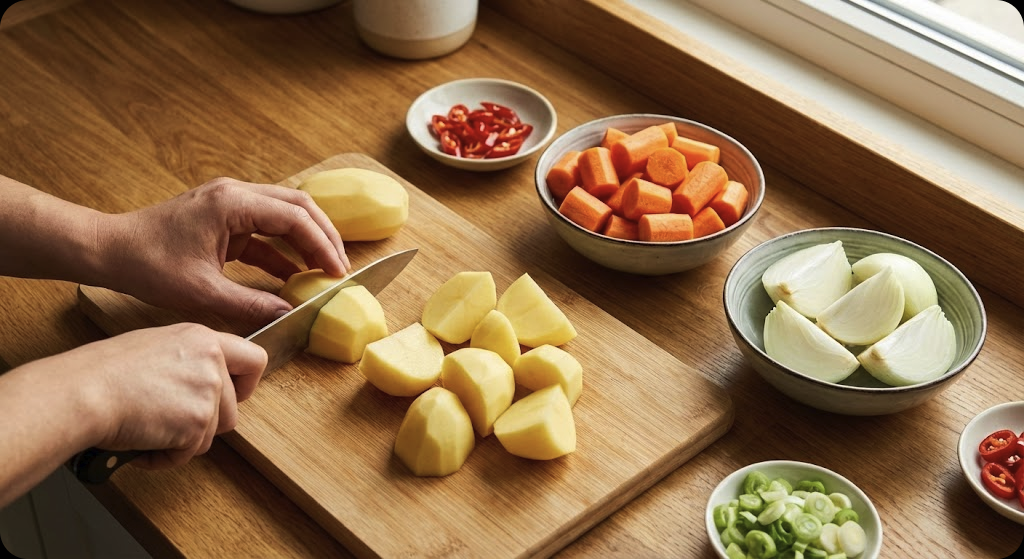
Step 4. Combine Chicken, Sauce, and Boil
Put the cleaned chicken and the seasoning sauce into a pot and pour in just enough water to cover the ingredients (approx. 500-600ml, or about 2-2.5 cups). Start boiling over high heat. When the broth starts to boil, stir the chicken well so it gets coated evenly with the sauce.
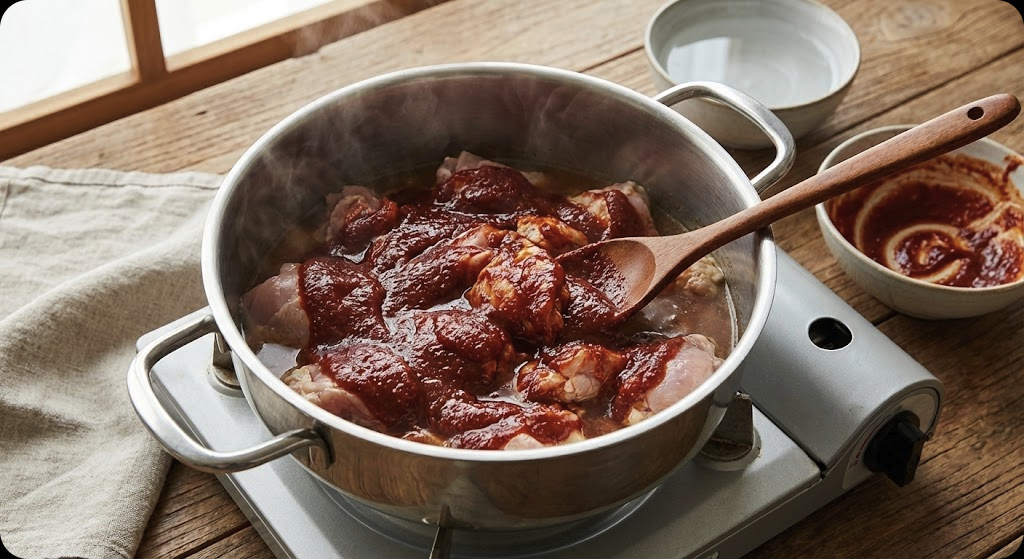
Step 5. Add Hard Vegetables and Simmer
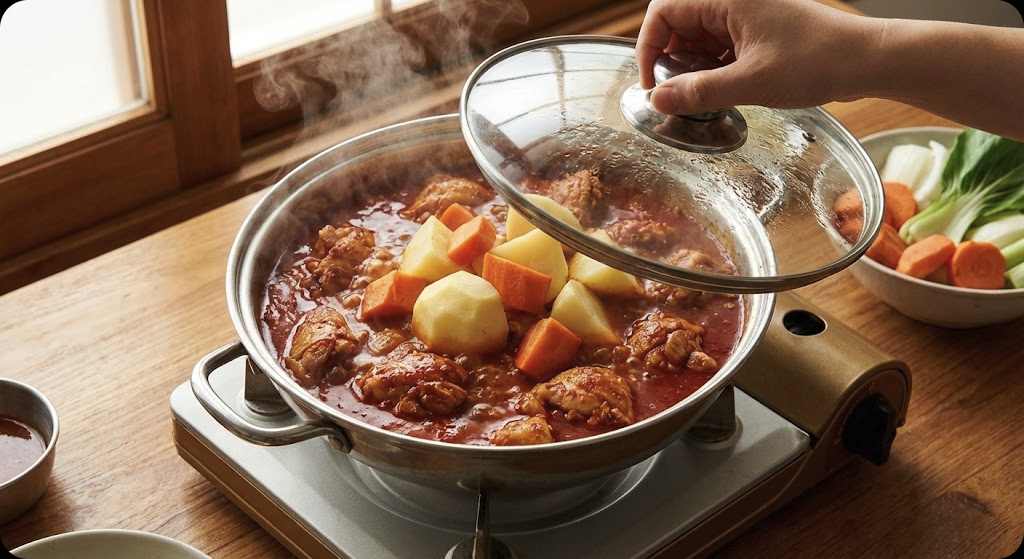
Once the broth is boiling, add the potatoes and carrots first. Now, reduce the heat to medium, cover with a lid, and let it simmer well for about 15 to 20 minutes. You need this waiting time for the chicken to become tender and the potatoes to cook through until fluffy!
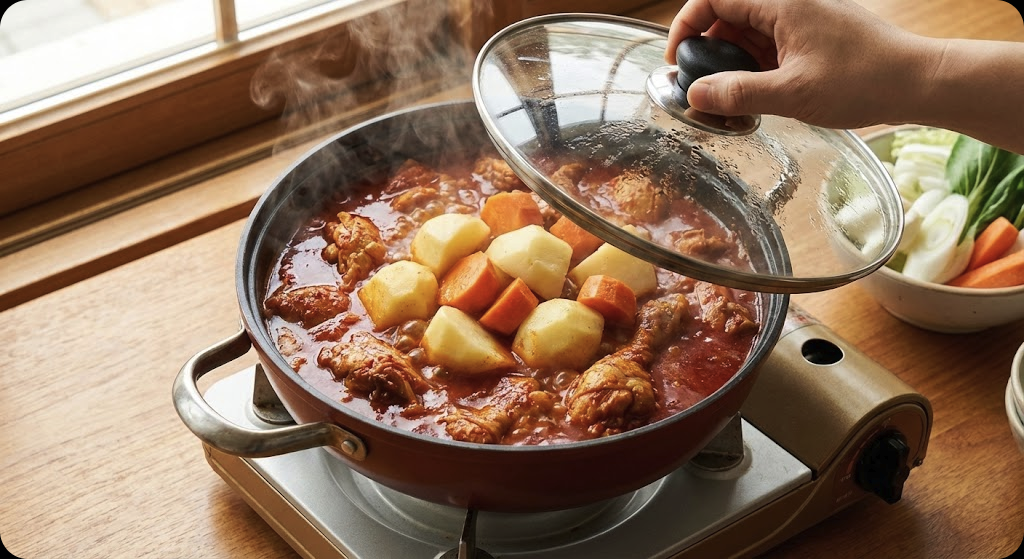
Step 6. Add Final Veggies and Finish!
If the potatoes are fully cooked, add the onions, green onions, and spicy chili peppers, and simmer for another 5 minutes. If you want to add rice cakes or glass noodles, this is the time to put them in. When the broth thickens and the sauce has soaked perfectly into the chicken, your delicious Dakdoritang is complete!
🍽️ Plating beautifully & How to enjoy it more
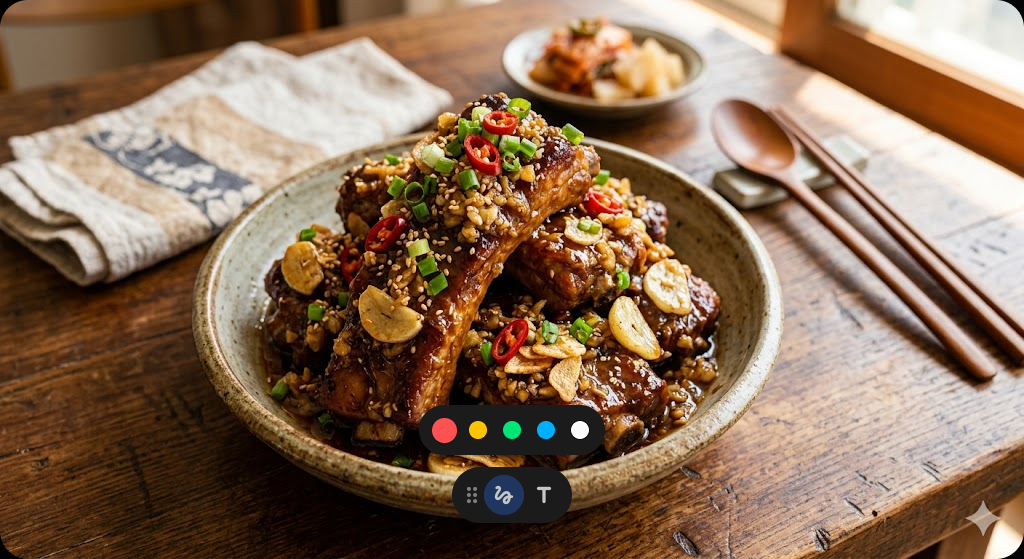
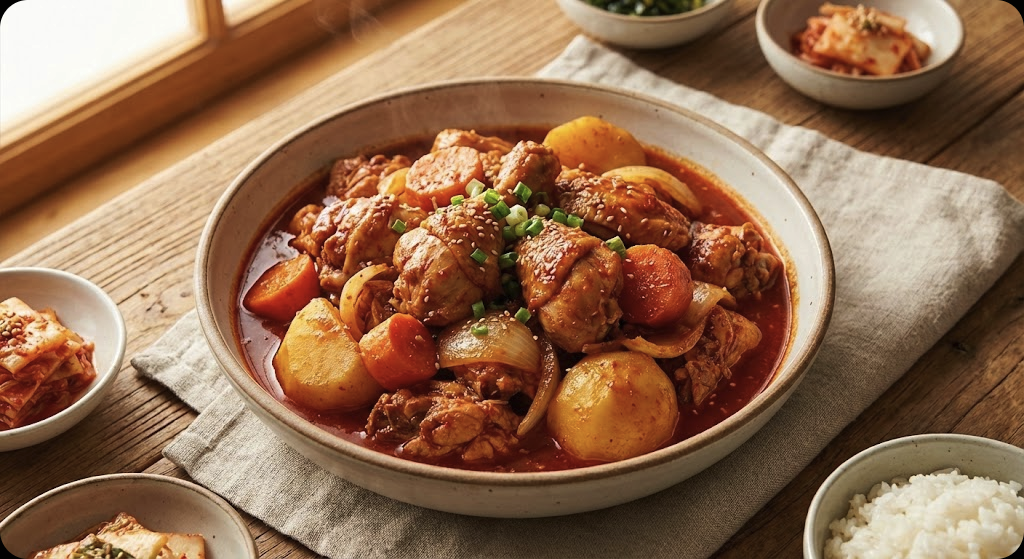
Serve the finished Dakdoritang in a wide hot pot or a deep serving bowl. Finally, sprinkle some sesame seeds and add a few fresh green chives on top to really bring the visuals to life. Personally, I think the best way to eat it is by mashing the potatoes into freshly cooked white rice and mixing it with the sauce. 🤤
Good Side Dish Pairings: Fluffy steamed eggs (Gyeran-jjim) to neutralize the spicy heat, or crispy seafood pancakes (Haemul-pajeon) make the best combinations. If you add a cold beer to the mix, all the fatigue of the day will melt away!
✨ Concluding Remarks
The Dakdoritang I introduced today isn't as difficult as you thought, right? Honestly, I used to find getting the seasoning right very difficult too, but since settling on this ratio, I haven't failed once. Don't forget to add seaweed flakes and sesame oil to the remaining sauce and stir-fry some rice at the end! (You all know this is the real main course, right? 😉)
If by any chance you have leftovers, store them in an airtight container in the fridge, and the next day add just a tiny splash of water and re-boil it. It actually tastes even better after a day because the flavors soak in deeper! I hope you have a happy time with your family or partner this weekend with this delicious home-cooked meal. I'll be back next time with another delicious recipe!