The Best Korean Food Guide: Melt-in-Your-Mouth Galbi-jjim Braised Short Ribs Recipe ✨
Fail-proof Galbijjim Golden Ratio, Revealing the Life Recipe that Melts in Your Mouth! ✨Hello! The weather has gotten much chillier lately, hasn't...
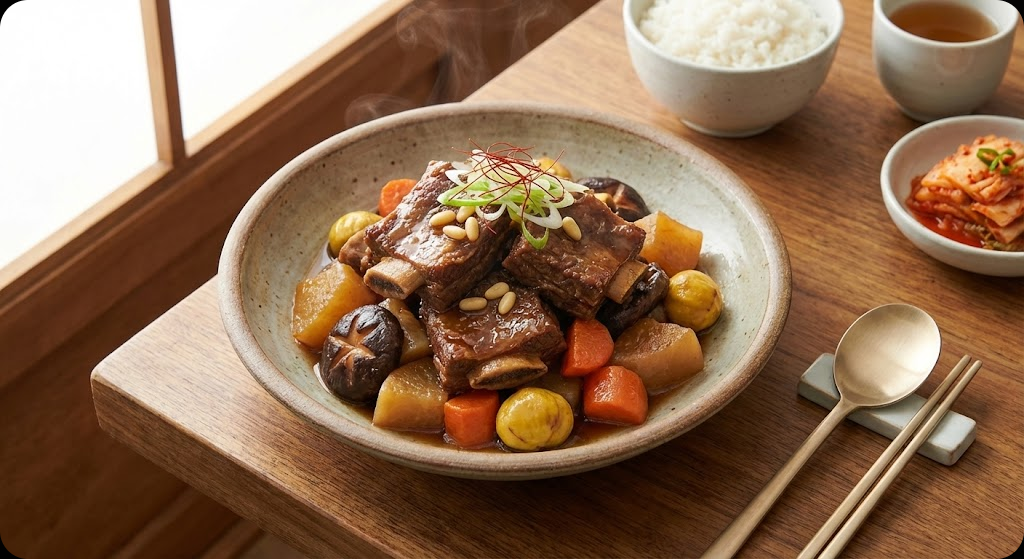
Fail-proof Galbijjim Golden Ratio, Revealing the Life Recipe that Melts in Your Mouth! ✨
Hello! The weather has gotten much chillier lately, hasn't it? ❄️ When the cold wind starts to blow, there's a certain home-cooked meal menu that comes to mind. It's Galbijjim with sweet and salty seasoning soaked right in! Actually, when people hear Galbijjim, they tend to hesitate because it seems like it takes a lot of work and is difficult, but today I'm going to generously share my "zero-failure" making know-how that I settled on after several trials and errors.
When my friends came over to my house recently and I made it according to this Galbijjim recipe, everyone finished a bowl of rice in no time, asking how the meat could be this soft! Thanks to the requests saying, "You absolutely must post this on your blog!", I'm finally putting it together. Even beginners, don't worry because if you follow along step-by-step, you can achieve a look and taste as good as a famous restaurant! 😉
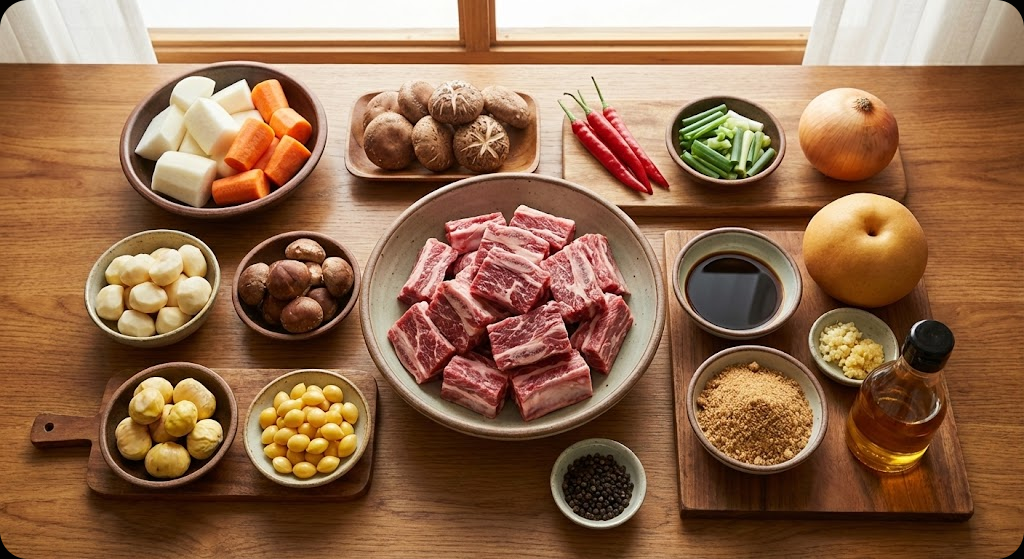
🛒 Preparing Ingredients (For 2 People)
More than anything else, the quality of the raw ingredients is important for Galbijjim, but the golden ratio of the seasoning determines the taste. Please prepare the following ingredients!
- Essential Ingredients: 800g ~ 1kg beef short ribs (for braising), 1/4 piece of radish, 1/2 carrot, 1 green onion, 1 onion
- Optional Ingredients (Tastes much better with these!): 3 shiitake mushrooms, 5-6 chestnuts, a few ginkgo nuts, 1 red chili pepper
- Seasoning Ingredients: 10 tbsp dark soy sauce, 4 tbsp sugar, 2 tbsp cooking wine, 2 tbsp minced garlic, 0.5 tsp minced ginger, 2 tbsp sesame oil, a bit of black pepper
- Secret Ingredient: 1 cup (200ml) pear juice or grated apple/pear
💡 Chef's Tip! When choosing meat, pick fresh ones that aren't too fatty and have a bright red color. Pear juice helps with the tenderizing process to make the meat soft so it melts in your mouth. If you don't have pear juice, using a store-bought "Crushed Pear" drink is also fine!
👩🍳 Full Cooking Process (8 Steps)
Sincerity is half the battle with Galbijjim. If you follow along step-by-step, you'll find the perfect taste!
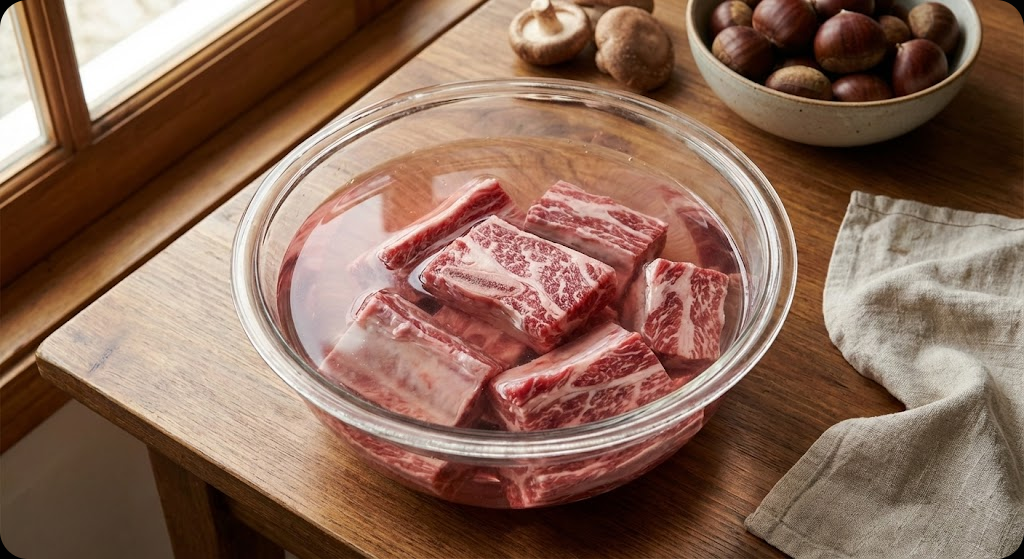
Step 1. Removing Blood (Most Important!)
The first gateway to catching the gamey smell of the ribs is removing the blood. Soak the ribs in cold water for at least 2 hours to remove the blood. If you change the water 3-4 times in between, it results in a much cleaner taste. If you're short on time, dissolve 1 tbsp of sugar in the water and soak them. The blood comes out faster because of osmosis!
Step 2. First Parboiling
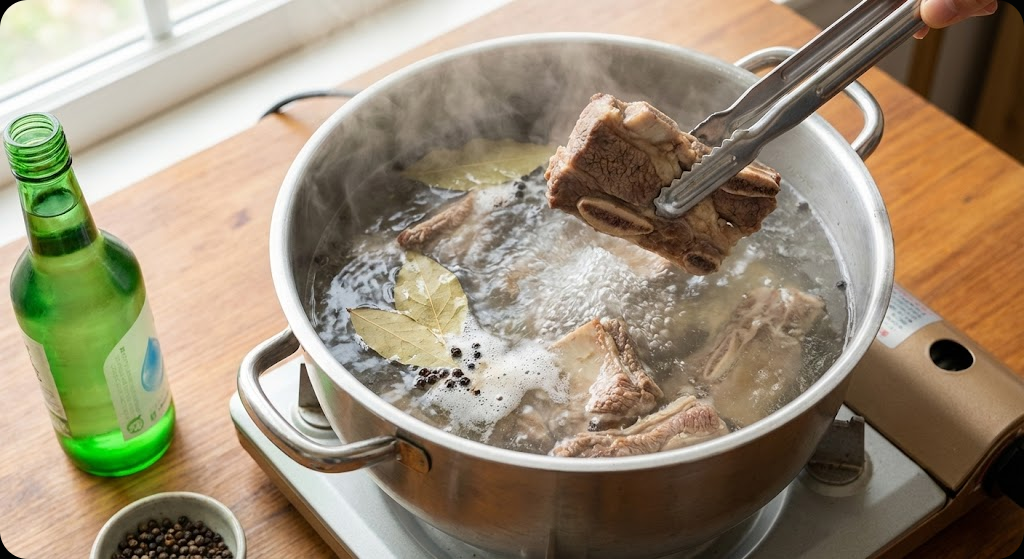
Add half a cup of soju, whole black peppers, and bay leaves to boiling water, then add the ribs with the blood removed and blanch for 5-10 minutes. At this time, white impurities will rise; you can boldly discard them. You should boil it just enough to cook the surface to lock in the juices.
Step 3. Meat Prepping and Cleaning
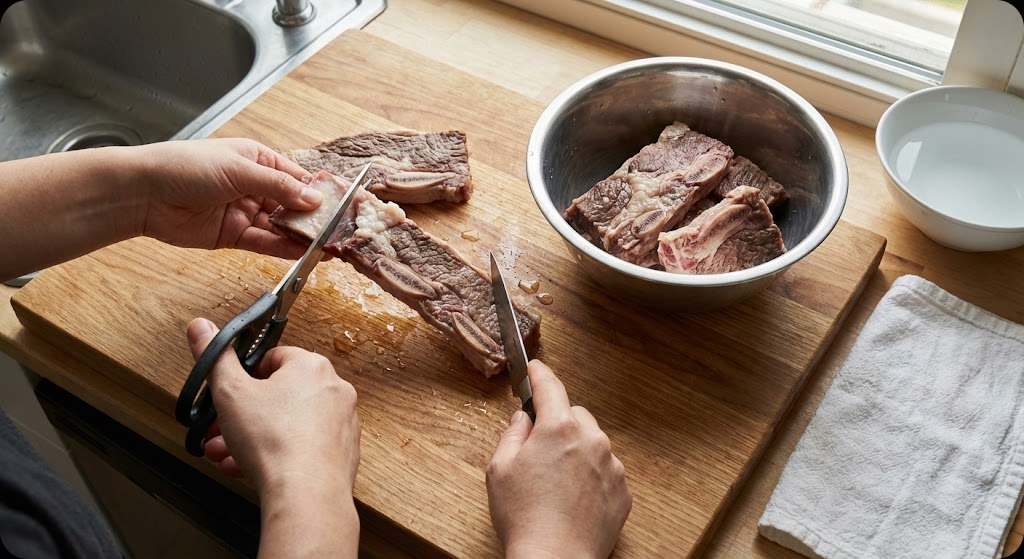
Clean the parboiled meat one by one in cold water. You must meticulously wipe off the powder or impurities stuck between the bones so the broth doesn't get cloudy. Use your intuition to slightly remove overly thick layers of fat with scissors at this time! And if you make cuts against the grain of the meat, the seasoning will soak in much better.
Step 4. Making the Golden Ratio Seasoning
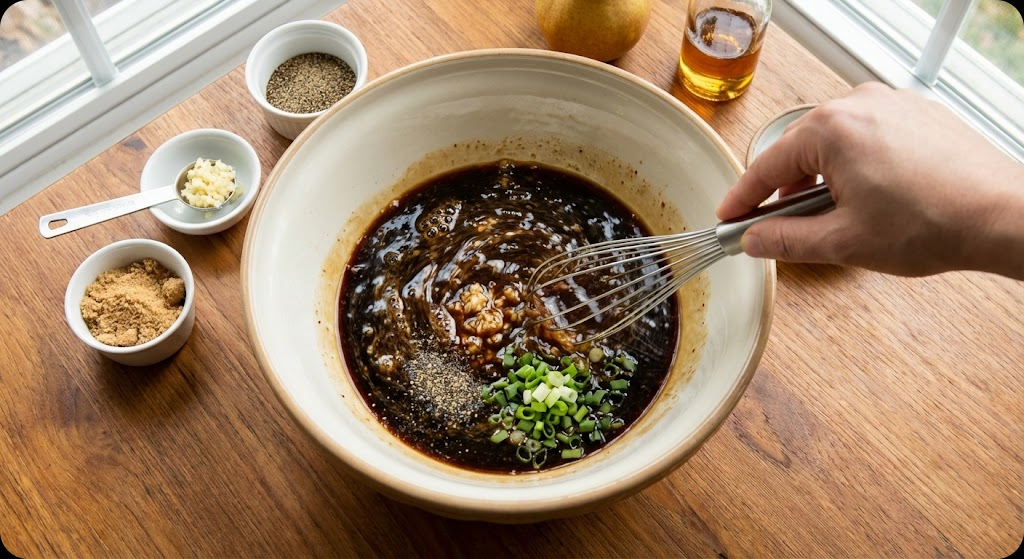
Mix all the prepared seasoning ingredients together, including soy sauce, sugar, pear juice, and garlic. I like to finely mince the white part of the green onion and add it here. The point is to stir well until the sugar is completely dissolved! This seasoning is the golden ratio that elevates the quality of a home-cooked meal.
Step 5. Marinating Meat and First Boiling
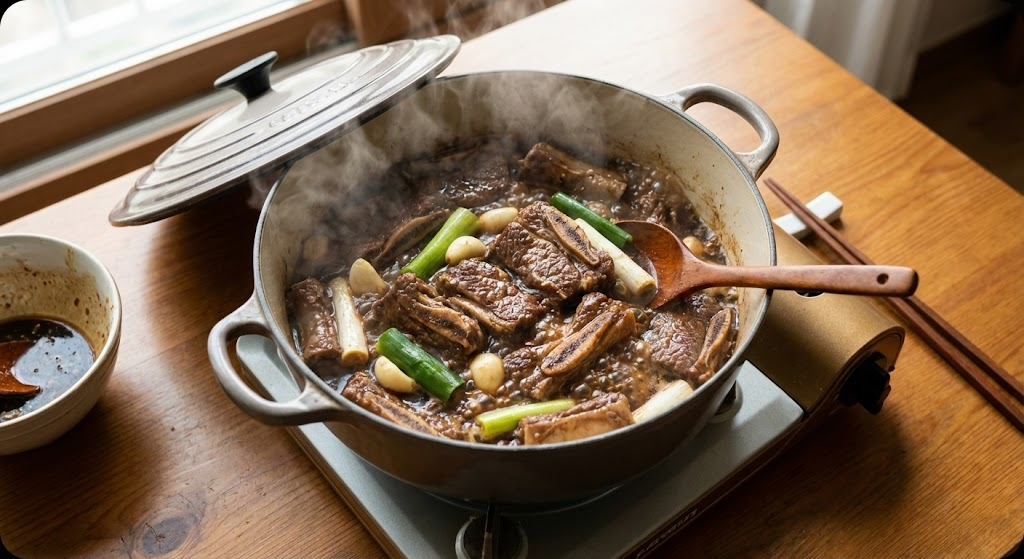
Pour the seasoning over the prepped meat, add about 500ml of water, and boil over high heat. At first, boil with the lid open so the seasoning soaks right into the meat, then once it starts boiling vigorously, close the lid, reduce to medium heat, and simmer for about 30 minutes.
Step 6. Prepping Vegetables
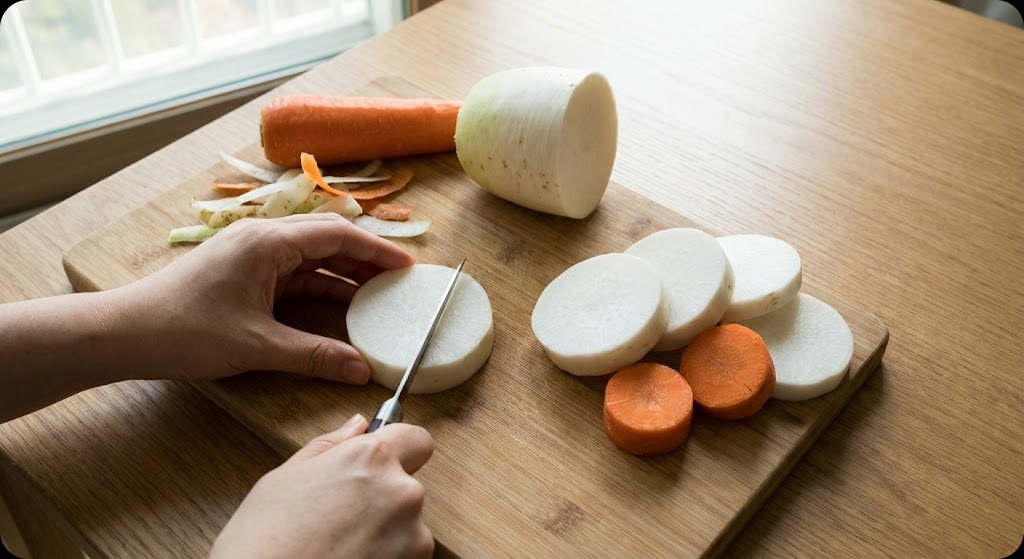
Prep the radish and carrot while the meat is cooking. Here's a pro tip! Round the edges of the radish and carrot. That way, even if you boil them for a long time, the vegetables won't crumble and the broth won't get messy. A cake that looks good tastes good, right? ✨
Step 7. Adding Sub-ingredients and Braising
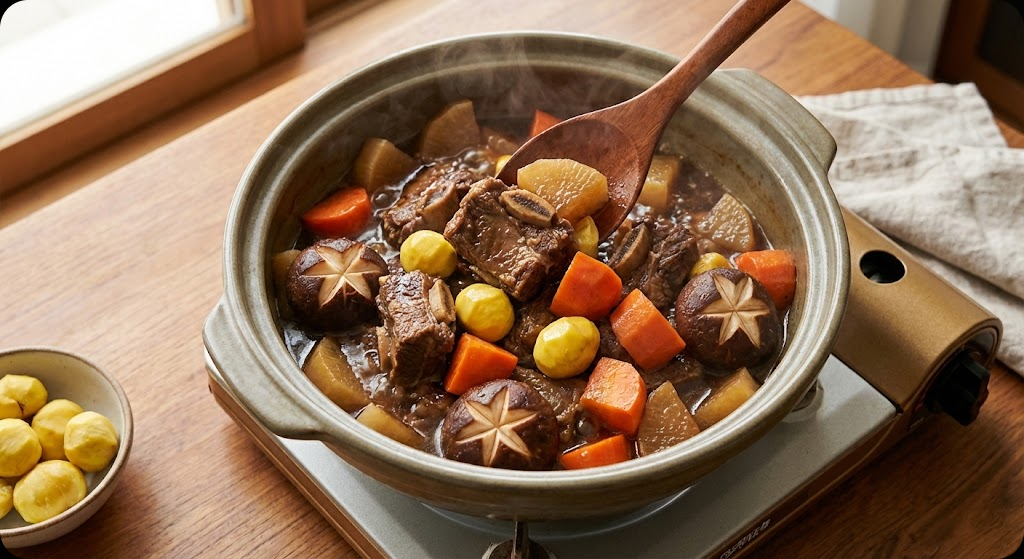
When the radish starts to turn transparent and cook, add the prepped carrot, mushrooms, chestnuts, etc. The sweetness from the vegetables will come out and deepen the flavor. The key is to simmer gently over medium-low heat until the broth is reduced. Change the position of the meat occasionally so the seasoning is coated evenly.
Step 8. Adding the Final Flavor
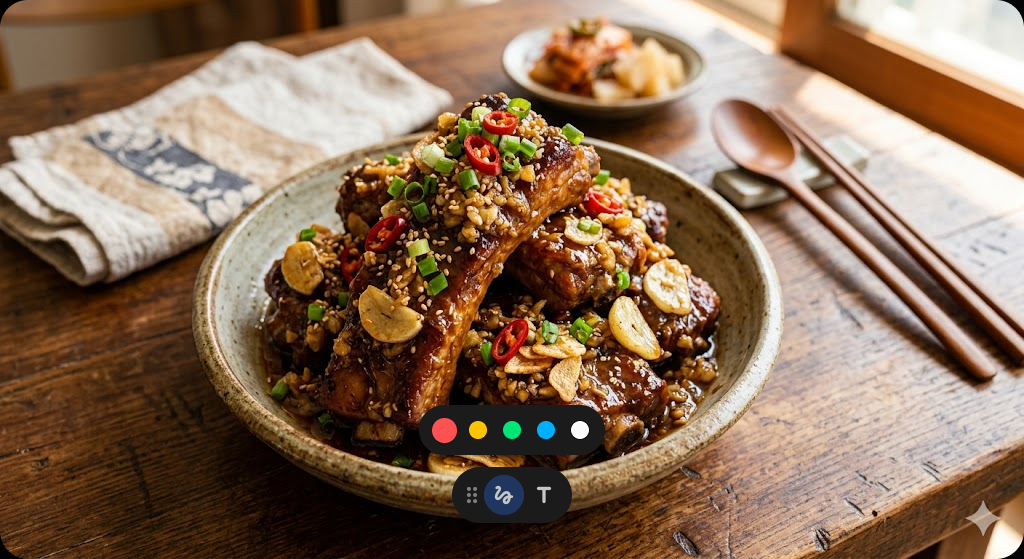
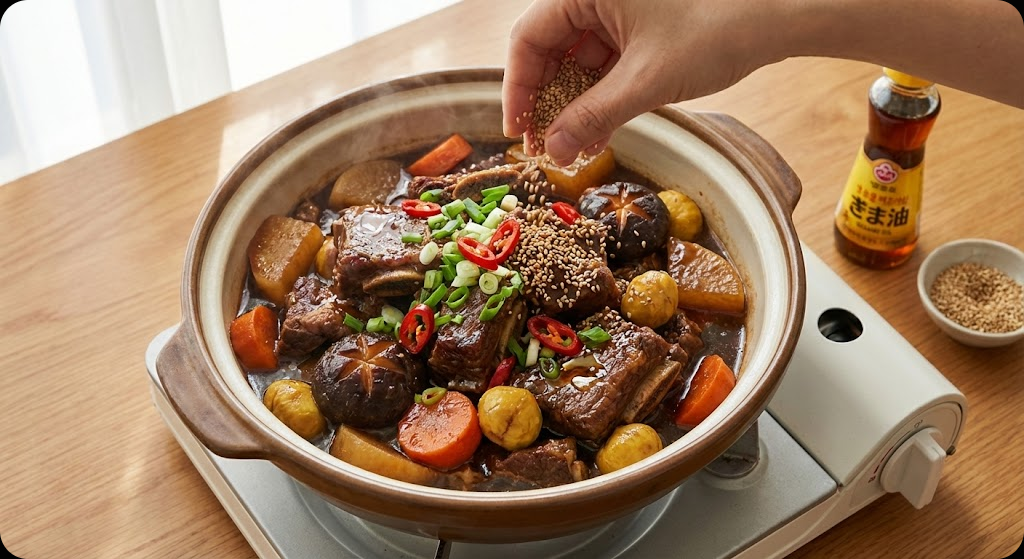
When the broth is almost gone and the meat is glistening, finish by adding the green parts of the green onion and the red chili pepper. Right before turning off the heat, a swirl of sesame oil and a sprinkle of sesame seeds will fill the whole house with a savory scent and stimulate your appetite!
✨ Completion and Plating Tips
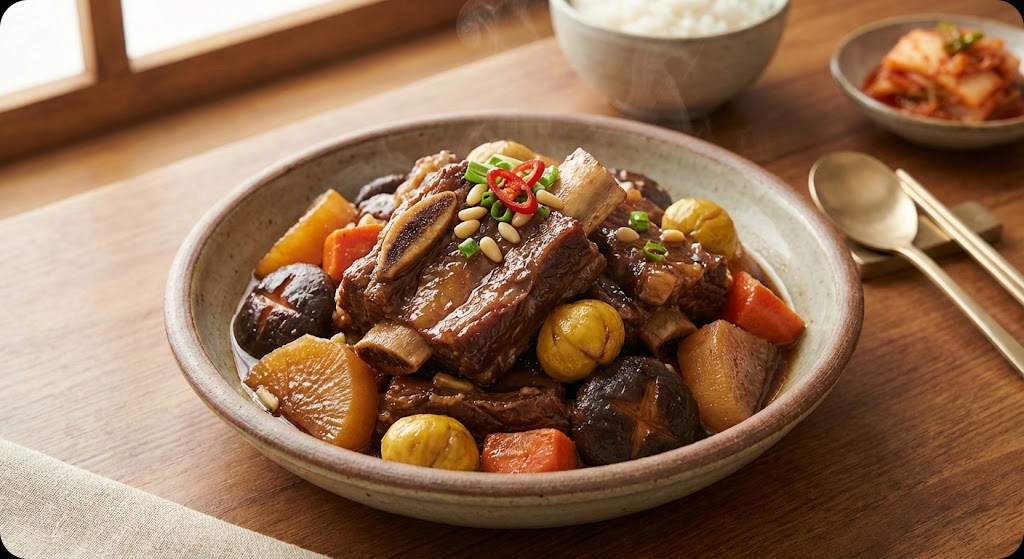
Pile the well-braised Galbijjim into a wide bowl. Placing the radish, carrot, and chestnuts evenly on top of the meat makes it look much more appetizing. If you add egg garnish or pine nuts on top, it's perfect even for a guest meal!
I recommend refreshing Dongchimi (radish water kimchi) or fresh Geotjeori (fresh kimchi) to accompany it. The meat is so soft and salty that putting a piece of meat on white rice and mixing in a bit of broth is pure happiness. 🍚 Never forget to make fried rice with a sprinkle of seaweed flakes in the leftover seasoning!
💬 Honest Review and Closing
It takes a bit of time, but after one bite, this Galbijjim recipe naturally makes you think, "Ah, this is why I cook it myself!" Since it's less stimulating than store-bought and has an excellent deep umami taste, my whole family praised it as their best Galbijjim ever. That feeling of satisfaction when the meat slips right off the bone! I really hope you experience it.
Storage Method: If there are leftovers, store them in an airtight container in the refrigerator, and when eating, add just a tiny bit of water and reheat over low heat to enjoy it just like the first time. I hope you have a warm time with your loved ones with a home-cooked meal full of heart! I'll be back with another delicious recipe next time. ❤️