Authentic Pork Kimchi-jjigae Stew Recipe: The Ultimate Comfort Korean Food
Hello! Today, I brought the recipe for Koreans' eternal soul food, Pork Kimchi-jjigae Stew ✨ Everyone, is this weather lately for real?
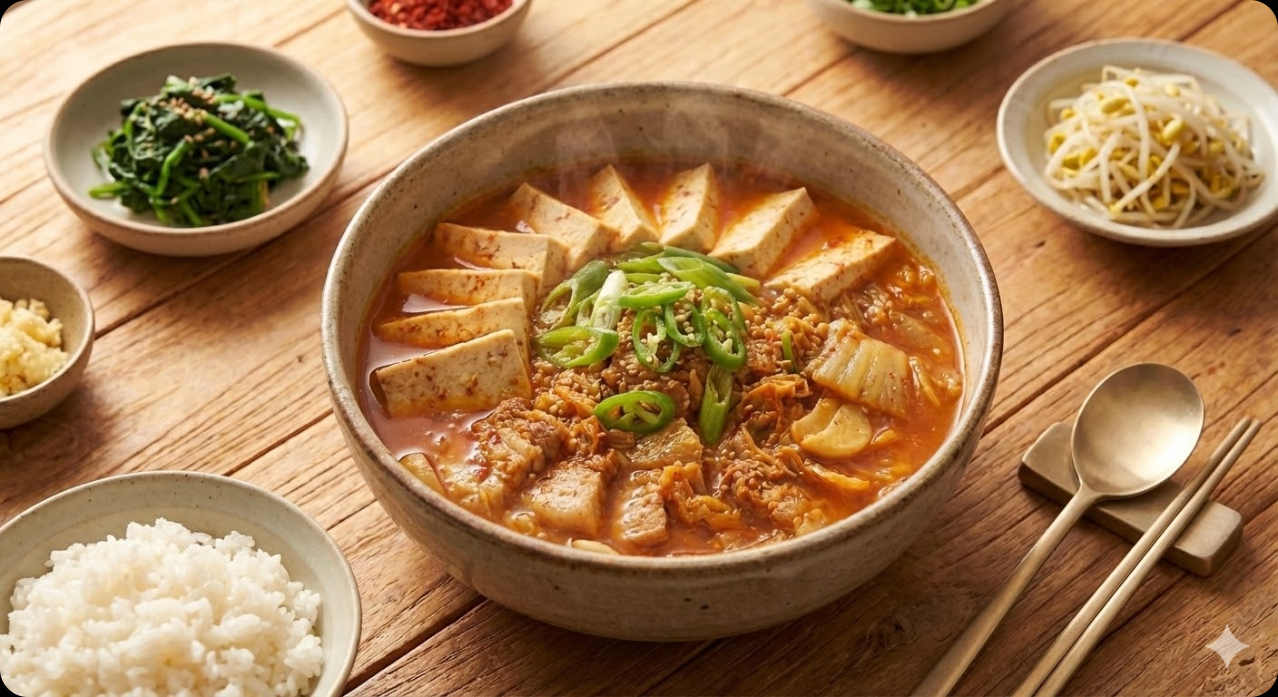
Hello! Today, I brought the recipe for Koreans' eternal soul food, Pork Kimchi-jjigae Stew ✨
Everyone, is this weather lately for real? The temperature dropped suddenly, and my nose was stinging on the way home from work. At times like this, what’s the first menu item that comes to mind? It has to be a bubbling pot of Pork Kimchi-jjigae Stew, right? Actually, friends came over to my place yesterday. I was wondering what to cook, then remembered the deeply aged kimchi in the fridge and immediately pulled out a pot.
Kimchi-jjigae is basically a national dish anyone can make, but surprisingly, many people ask, "Why doesn't it taste like the restaurant version when I make it?" So today, I’m generously sharing my absolute best recipe—one I settled on after countless trials and errors—that guarantees a truly addictive taste. This is a secret technique you'll use for a lifetime once you learn it, so stay focused until the end! Seriously, the moment you taste the broth, you'll automatically say, "Wow, this is amazing." 😍
Essential Ingredients That Determine the Stew's Flavor (Serves 2) 🛒
The basis of cooking is good ingredients! It’s no exaggeration to say that for Kimchi-jjigae, the quality of the main ingredients determines 80% of the flavor. Try preparing it with my recommended combination.
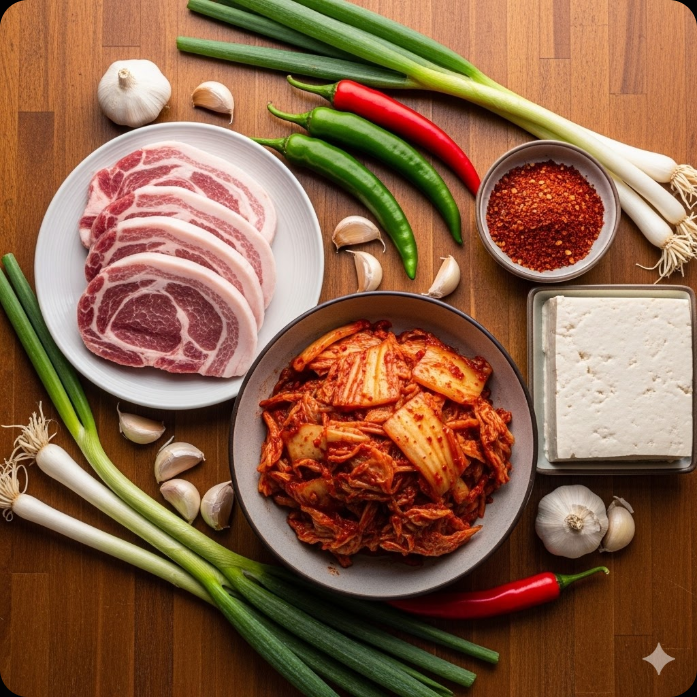
- Essential Ingredients: Well-fermented (aged) Kimchi 1/4 head (approx. 300g), Pork (pork neck or front leg/shoulder for stew) 200g, Tofu 1/2 block, Green onion (scallion) 1/2 stalk, Cheongyang chili pepper (or jalapeño) 1, Rice water (water rinsed from rice) 500ml
- Seasoning Sauce Ingredients: Korean chili flakes (Gochugaru) 2 tablespoons, Soup soy sauce (Guk-ganjang) 1 tablespoon, Minced garlic 1 tablespoon, Sugar 0.5 tablespoon (adjust according to the sourness of the kimchi), Anchovy fish sauce 1 tablespoon (This is the secret to umami!)
- Optional Ingredients: Onion 1/4, Perilla oil 1 tablespoon
💡 Blogger's Tip: I recommend using pork front leg (shoulder), which has a good mix of fat! It's cost-effective and doesn't get tough even when boiled for a long time. Also, the kimchi must be well-fermented sour kimchi. If your kimchi is too fresh, use your sense and add 1 tablespoon of vinegar to balance the acidity!
Now, Shall We Start Cooking in Earnest? (6-Step Process) 🥘
Step 1. Preparing and Prepping Ingredients
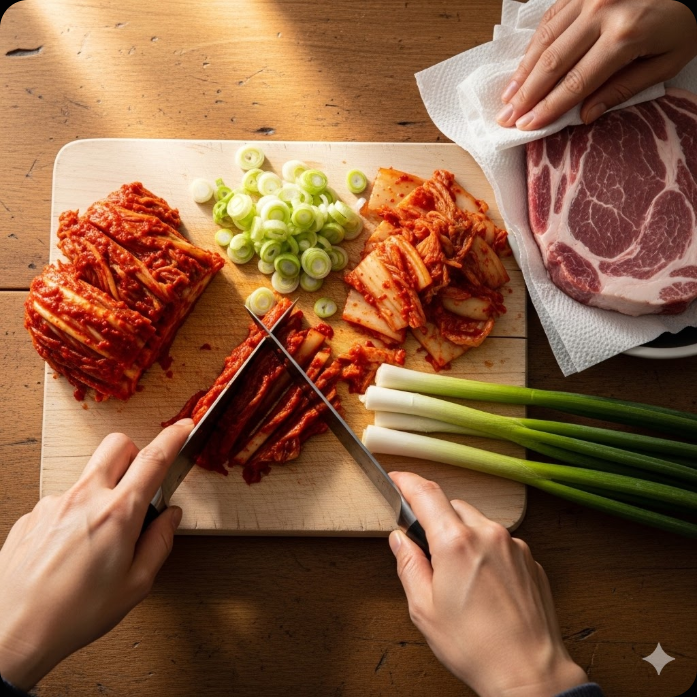
First, lightly wipe any blood from the pork using a paper towel. Removing the blood well prevents unpleasant odors in the broth. Roughly chop the kimchi into bite-sized pieces, and prep the tofu, green onions, and chili peppers in advance. Personally, I prefer slicing the kimchi a bit large rather than too finely for better texture!
Step 2. Stir-frying Meat to Bring Out Aroma
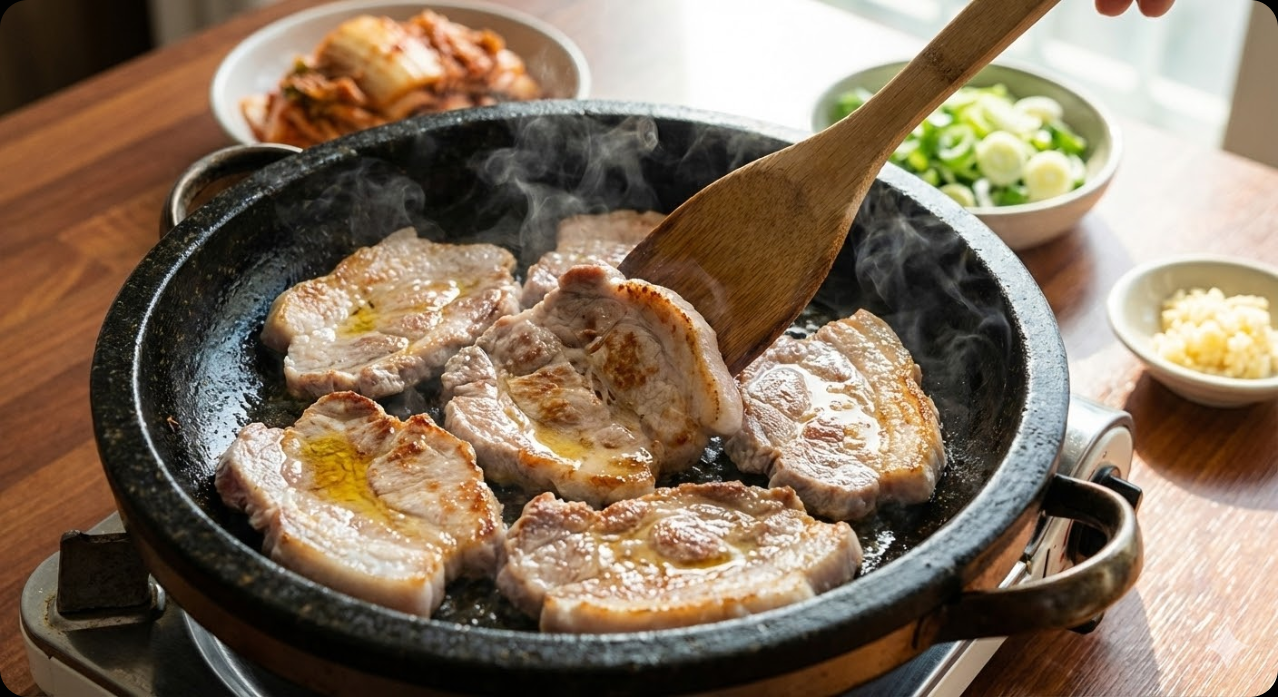
Drizzle 1 tablespoon of perilla oil in a pot and stir-fry the pork first. Keep the heat at medium. The key is to fry it sufficiently until the surface of the meat turns white and savory oil comes out! Stir-frying the kimchi in this pork fat makes the broth much deeper and richer later.
Step 3. The Meeting of Kimchi and Sugar
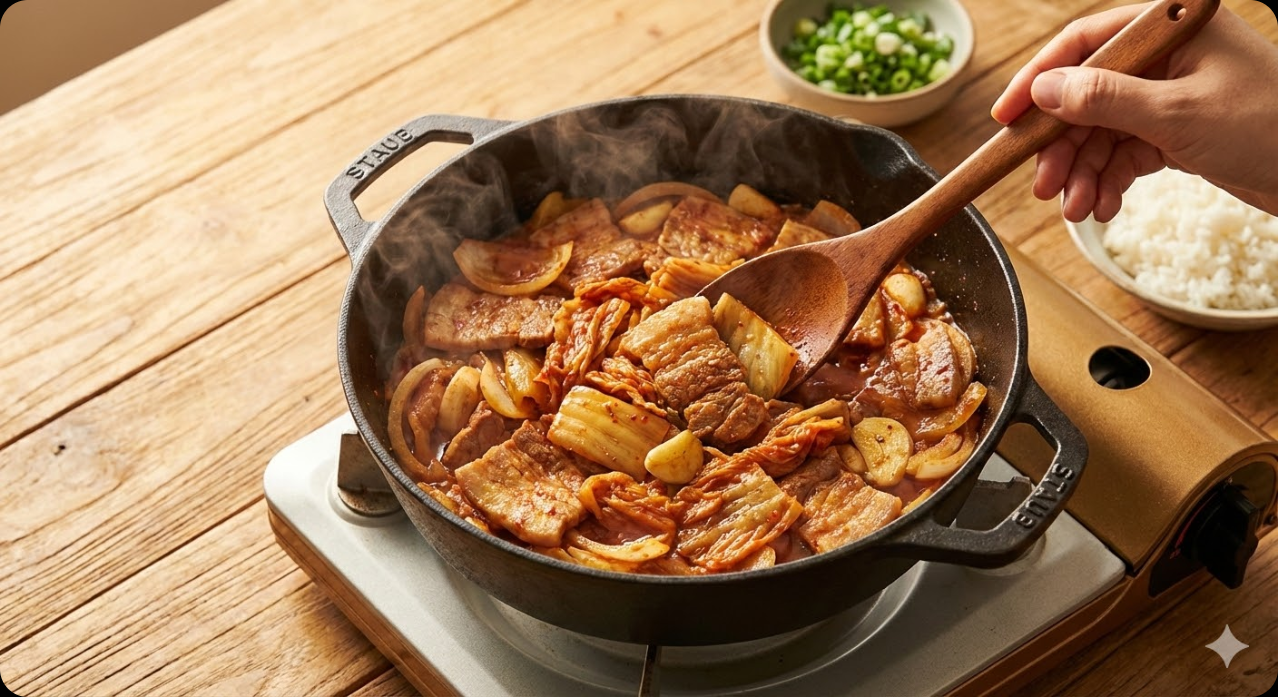
Once the meat is cooked to some extent, add the sliced kimchi and stir-fry together. Here's an important tip! If your kimchi is very sour, try adding 0.5 tablespoon of sugar at this point. The sugar neutralizes the strong sourness of the kimchi while significantly boosting the umami flavor. Stir-fry carefully for about 5 minutes until the kimchi becomes slightly translucent.
Step 4. Pouring Rice Water and Creating the Base
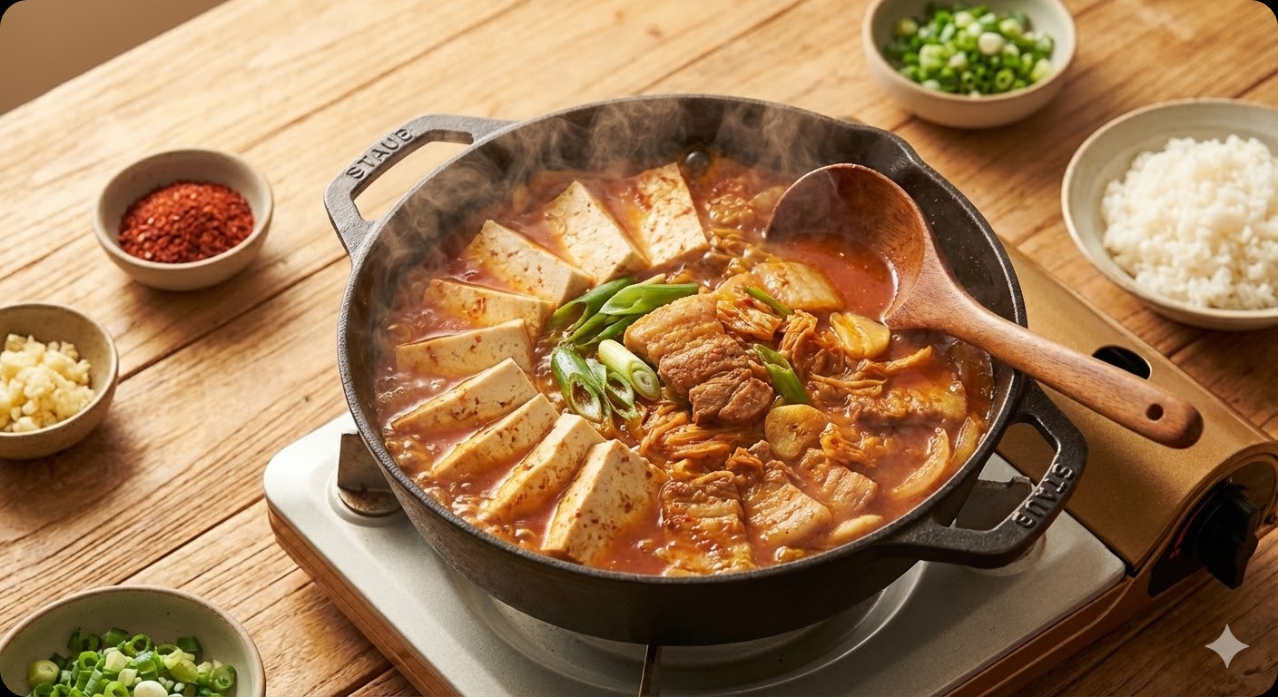
Now, pour in the prepared 500ml of rice water (water used to rinse rice). Plain water is fine, but using rice water makes the broth much thicker and deeper thanks to the starch. If you're thinking, "Ah, I really want a proper home-cooked meal today," definitely prepare rice water. After pouring the water, raise the heat to high and bring it to a rolling boil.
Step 5. Adding Seasoning and Balancing the Flavor
When the broth starts to boil, add 2 tablespoons of chili flakes, 1 tablespoon of minced garlic, and 1 tablespoon of soup soy sauce. Then, add 1 tablespoon of anchovy fish sauce, the core of my recipe! It creates a much deeper flavor than seasoning with salt alone and completes that "savory, addictive taste" you get at restaurants. Taste the broth, and if it lacks saltiness, add a pinch of salt.
Step 6. Adding Final Ingredients and Simmering
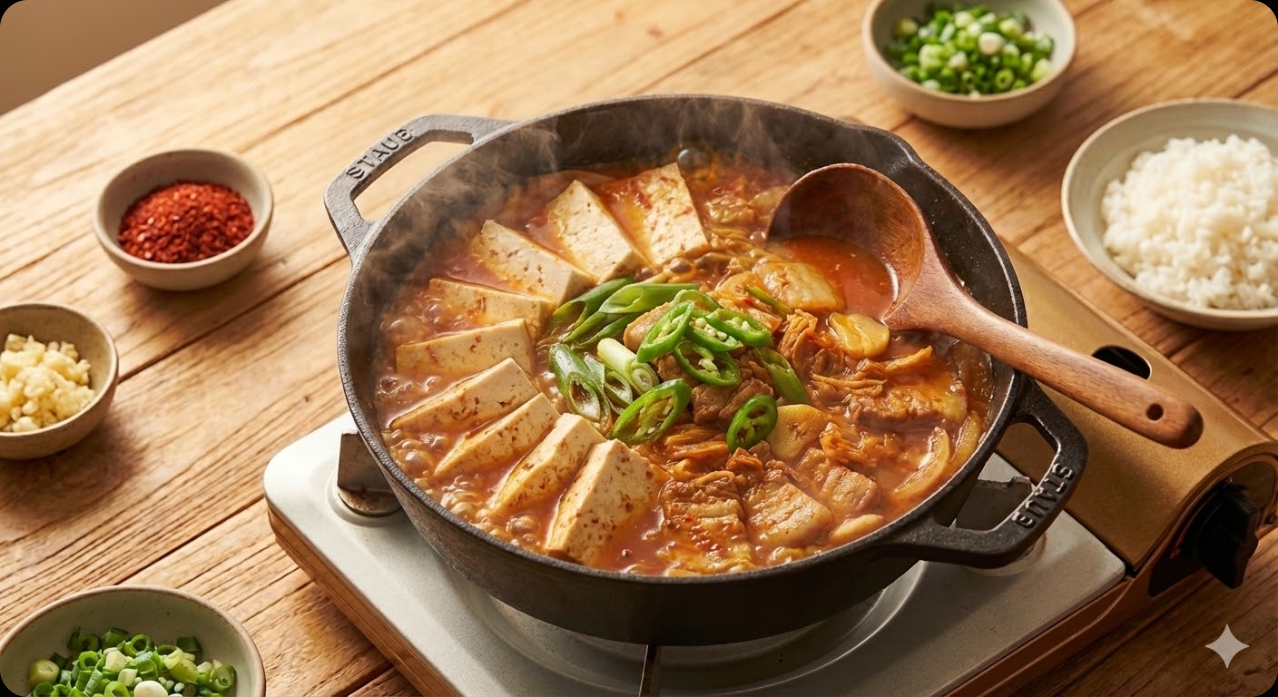
Finally, beautifully place the tofu, green onions, and Cheongyang chili peppers on top, then reduce the heat to medium-low and let it simmer gently for about 5 more minutes. You know that stews get deeper in flavor as the ingredients meld together the longer they boil, right? Once the broth has soaked into the tofu, it's finally done!
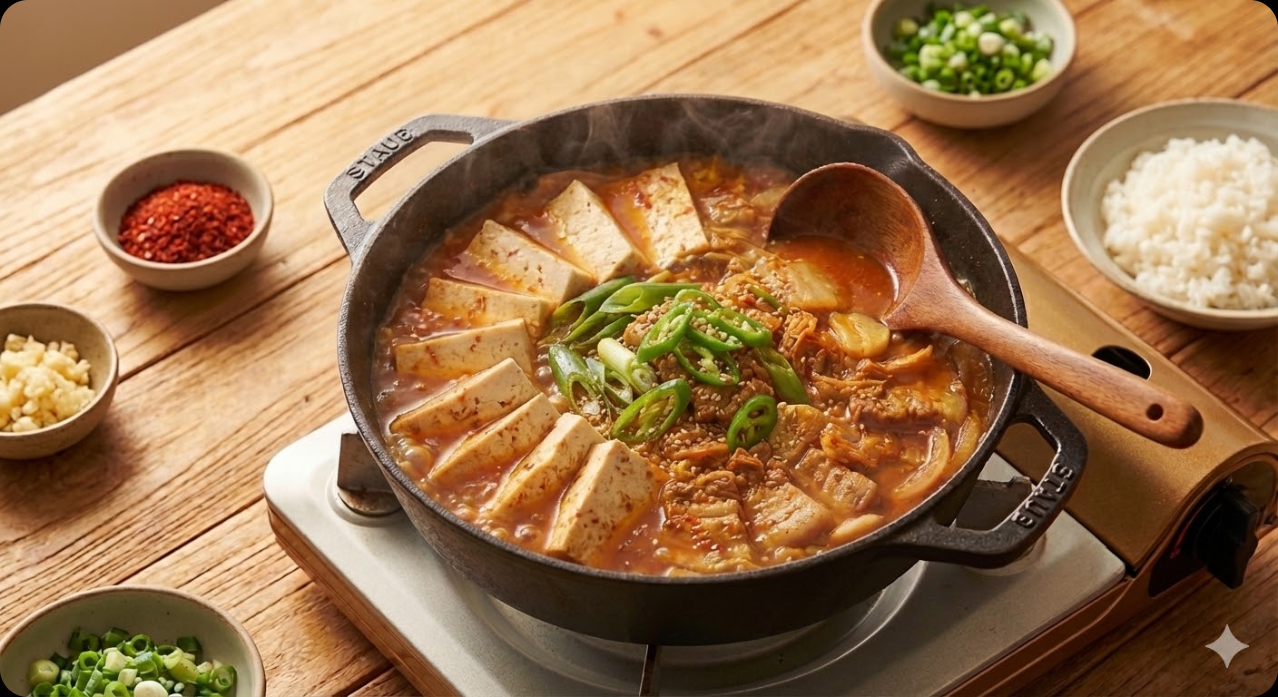
Plating to Eat with Your Eyes First & Best Combinations 🍚
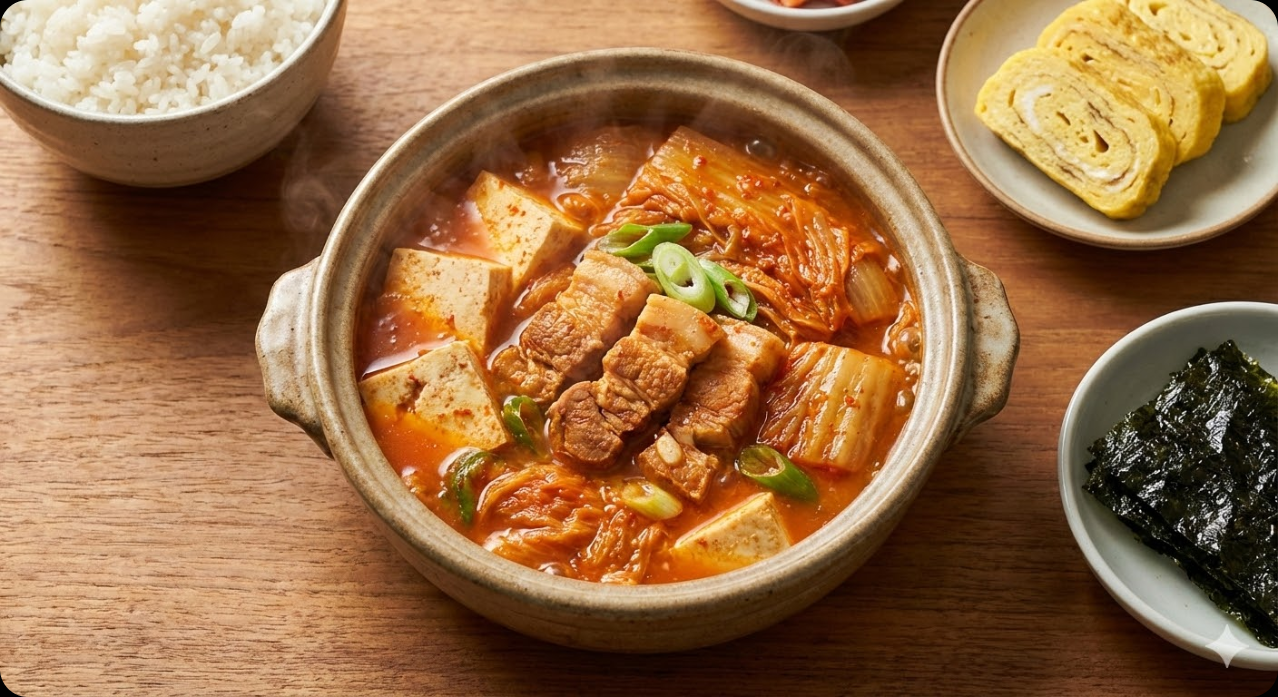
While it looks great serving the carefully cooked Kimchi-jjigae straight from the pot onto the table, transferring it to a rustic earthenware pot (ttukbaegi) keeps it warm longer, making it even more delicious to enjoy. If you add a little more green onion as a garnish at the end, the visuals become perfect!
The absolute best side dishes to pair with this pork Kimchi-jjigae are Rolled Omelet (Gyeran-mari) and Seasoned Seaweed (Gim). Mixing hot white rice with plenty of kimchi and meat, then taking a bite of soft rolled omelet just when it gets spicy... it’s a taste that makes you envy nothing else in the world. A glass of cold barley tea makes for a perfect, clean finish!
Honest Review After Cooking & Storage Tips 📝
Honestly, even though I made it, this stew was legendary! The meat was tender, and the broth was so rich that I emptied two bowls of rice in an instant. I think the golden ratio seasoning and rice water are truly the secret weapons. I was so proud when my friends praised it, saying it was much tastier than buying it outside.
If you have leftover stew, let it cool down and store it in an airtight container in the refrigerator. You all know that Kimchi-jjigae tastes even better when reheated the next day, right? If the broth has reduced too much, just add a tiny bit of water and boil it again. How about having a warm home-cooked meal with delicious Pork Kimchi-jjigae tonight, without hesitation? You must try making it! You won't regret it~
I'll come back with another delicious recipe next time. Bye! 💖