🥘 Hearty Korean Food: Pork Backbone Stew with Aged Kimchi and Minari (미나리 묵은지 등뼈찜)
🌿 Aromatic Freshness! Everything About Crunchy Minari Mugeunji Deungppyeojjim Hi everyone!
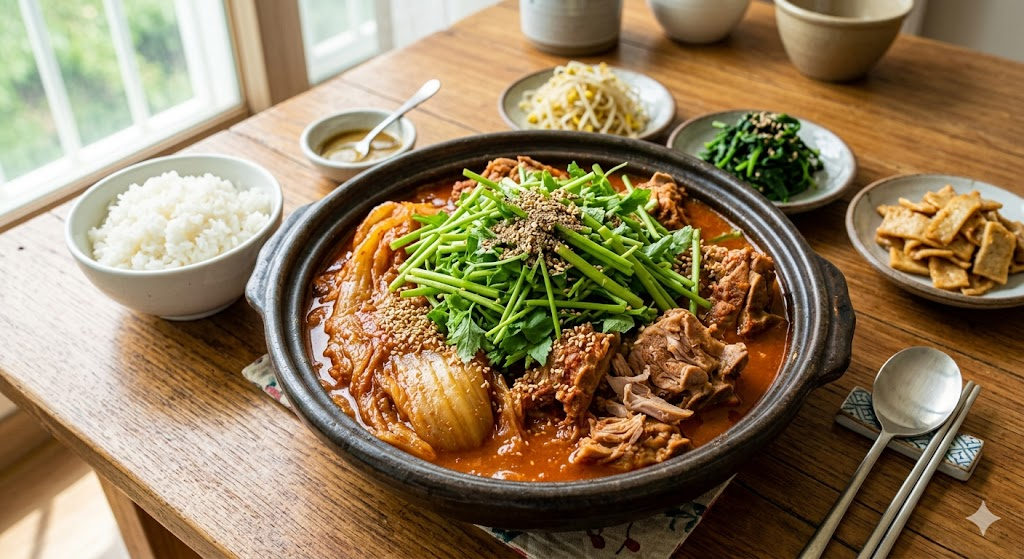
🌿 Aromatic Freshness! Everything About Crunchy Minari Mugeunji Deungppyeojjim
Hi everyone! The weather has been getting quite chilly lately, hasn't it? On days like this, nothing beats a bubbling pot of hot stew. A few days ago, when some friends came over, I was wondering what to make and decided to pull out that aged kimchi (mugeunji) I’ve been saving in the back of the fridge. Since plain kimchi stew felt a bit too simple, and my friends were craving meat, I decided to whip up some "Minari Mugeunji Deungppyeojjim" (Pork Backbone Stew with Aged Kimchi and Water Dropwort)!
To be honest, pork backbone stew usually feels like a dish you have to go out to a restaurant for, right? It can look a bit intimidating. But even though it takes a little time and love, the method is actually very straightforward! The aromatic Minari (water dropwort) added at the very end was the ultimate game-changer. The deep, rich flavor of the aged kimchi, tender meat, and the crunch of the Minari—as soon as my friends took a bite, they raved, "You could totally sell this!" Let me show you how to make it right now.
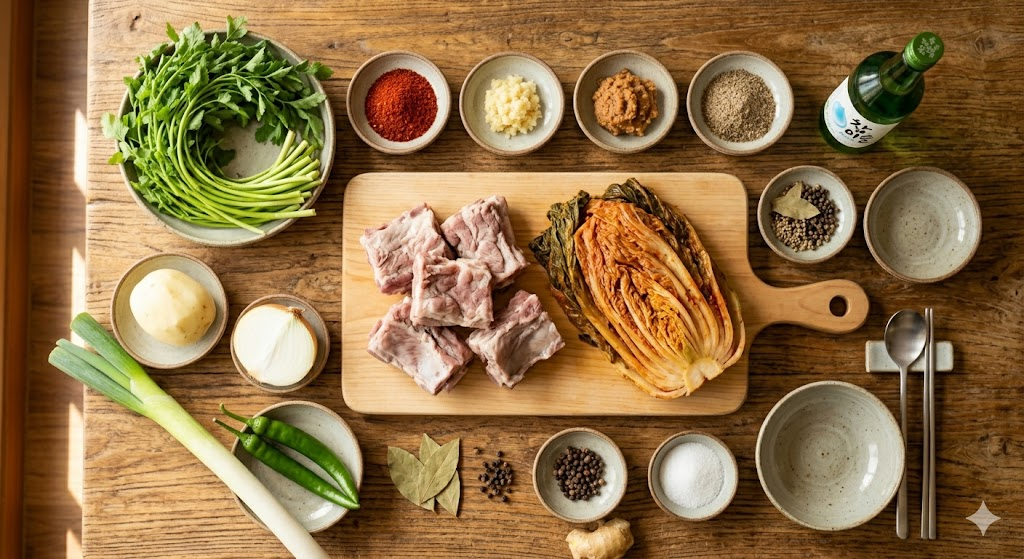
🛒 Ingredients Preparation (Serves 2)
Stick to the basics, but remember—freshness is key! Since cleaning the pork backbone is the most important part of removing any gamey smell, please choose your meat carefully.
- Essential Ingredients: 1kg (~2.2 lbs) Pork backbone, 1/4 head of Mugeunji (Aged Kimchi, approx. 400g), 1 large handful of Minari (Water Dropwort), 1/2 Onion, 1 Green onion, 2 Cheongyang chilies (or serranos)
- For Parboiling the Meat: 1 tablespoon Doenjang (Soybean paste), 3 Bay leaves, 10 Black peppercorns, 1/2 cup Soju (The secret weapon for removing odors!)
- Sauce Ingredients: 4 tablespoons Gochugaru (Korean chili flakes), 3 tablespoons Soy sauce, 2 tablespoons Minced garlic, 1 tablespoon Sugar, 2 tablespoons Mirin (Cooking rice wine), a pinch of Ginger powder, 2 tablespoons Perilla seed powder (For that nutty flavor!)
- Optional Ingredients: 1 Potato, Glass noodles (pre-soaked), 500ml Bone broth
💡 Pro Cooking Tip! Choose Minari with tender, thin stems rather than thick ones. If your aged kimchi is too sour, adding an extra 1/2 tablespoon of sugar will neutralize the acidity and make it taste much better. You’ll find the ultimate flavor ratio by using store-bought bone broth instead of plain water!
👩🍳 Cooking Process (Master it in 7 Steps)
Now, shall we get started? This dish is all about time and sincerity, so take your time and enjoy the process!
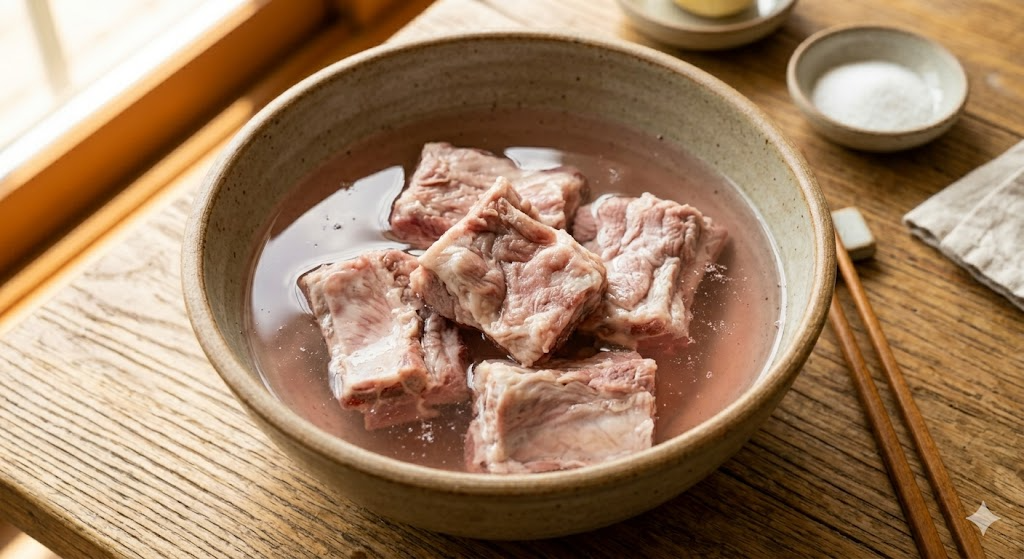
Step 1. Drawing out the blood from the backbone This is the most crucial first step! Soak the pork backbone in cold water for 1 to 2 hours to remove the blood. Changing the water a few times in between will result in a much cleaner taste. You must draw out the blood properly to ensure the meat doesn't have a gamey smell.
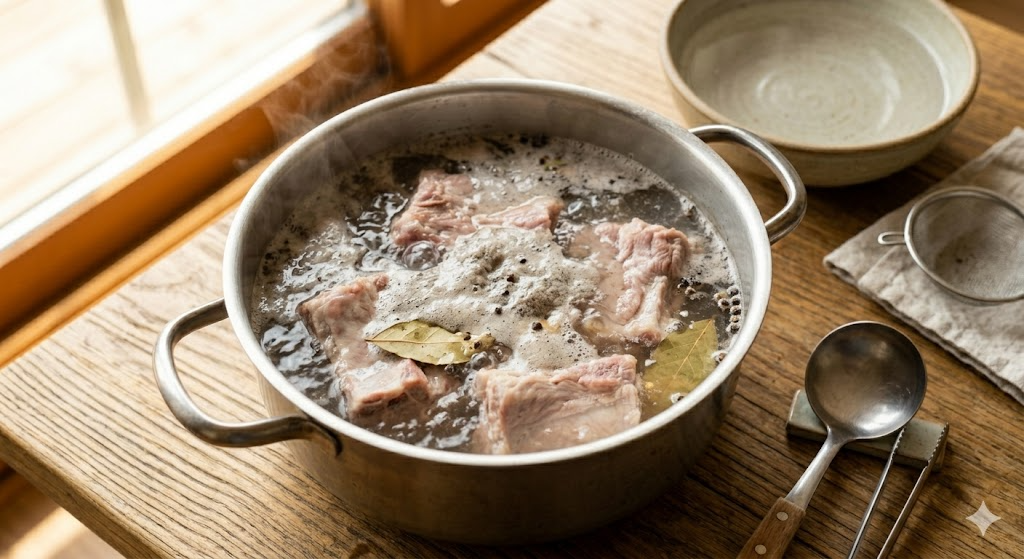
Step 2. First parboiling Fill a pot with enough water to cover the bones and add the doenjang, bay leaves, peppercorns, and soju. Let it boil for about 10 minutes. You'll see a lot of impurities rising to the top. Boldly discard that water and rinse each bone individually under clean, cold water.
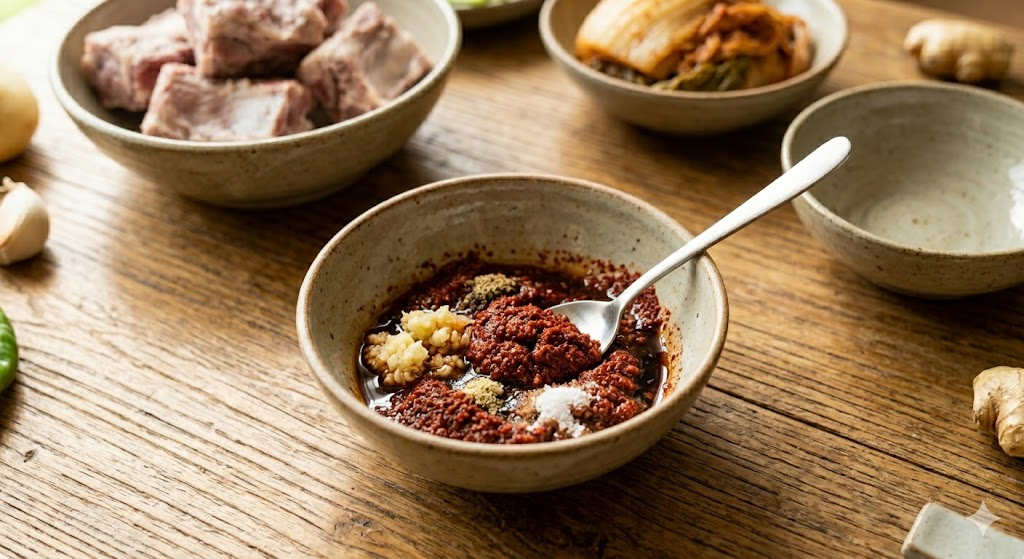
Step 3. Making the sauce While the meat is being prepared, mix the sauce ingredients (chili flakes, soy sauce, garlic, sugar, etc.) and let it sit to age briefly. You can add the perilla seed powder later, but mixing it in now makes the sauce thicker and keeps it from separating!
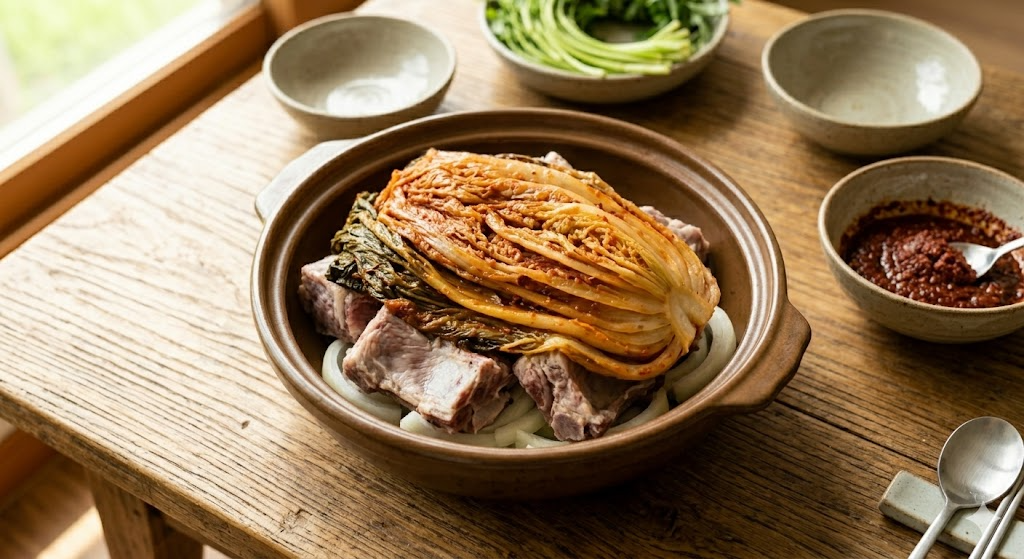
Step 4. Layering the ingredients Lay the sliced onions on the bottom of a wide stew pot and place the cleaned bones on top. Then, take the star of the show—the mugeunji—and cover the bones like a big blanket. Adding a ladle of the kimchi juice will really boost the depth of flavor.
Step 5. Pouring broth and simmering Pour in the prepared bone broth (or water) and spread the sauce evenly on top. Start on high heat, and once it begins to boil, reduce to medium-low and simmer for at least 40 minutes to an hour. You need to simmer it slowly so the meat falls right off the bone!
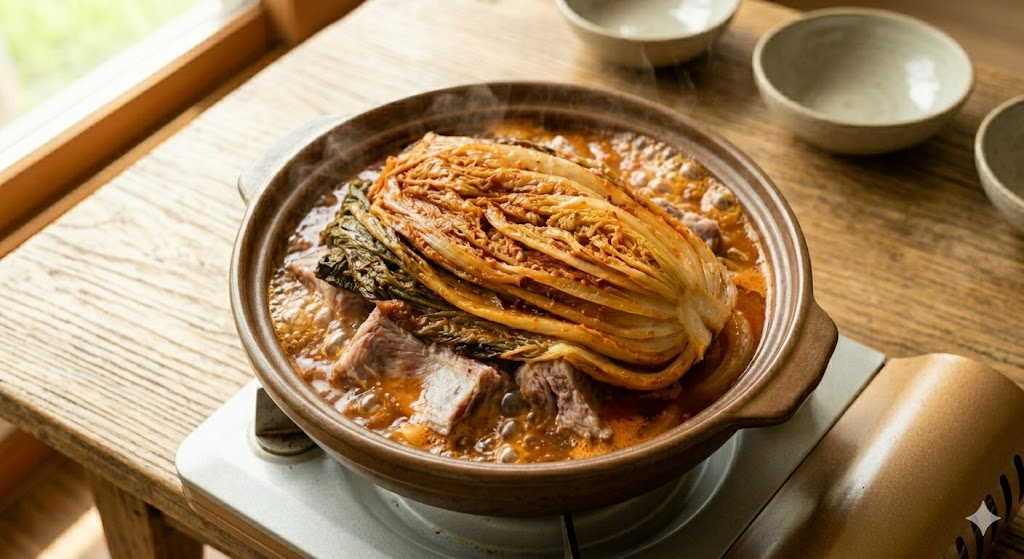
Step 6. Adding vegetables and final seasoning Once the meat is tender and the liquid has reduced slightly, add the green onions and chilies. Taste the broth and adjust with fish sauce or salt if needed. I added some pre-soaked glass noodles at this stage, and they were a total hit!
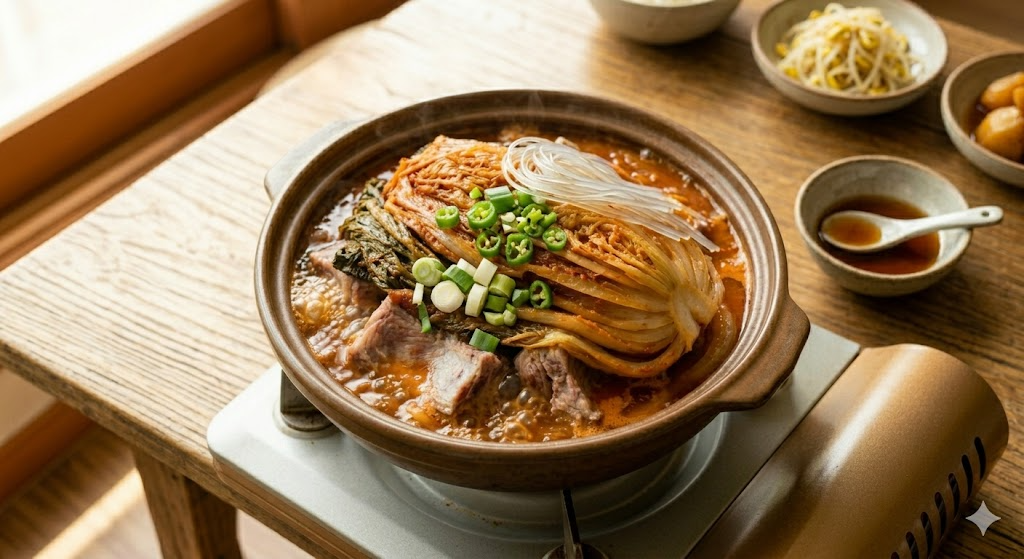
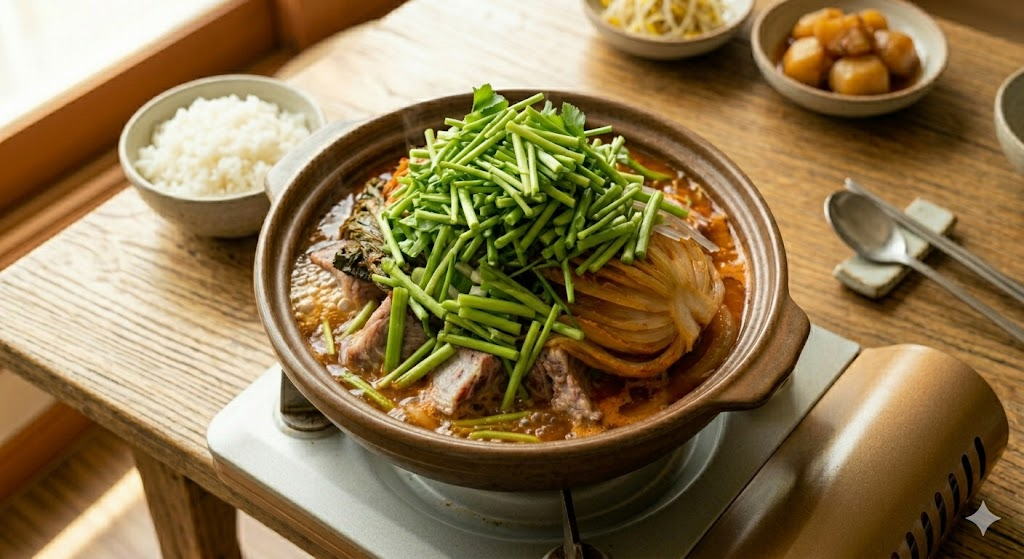
Step 7. The Minari finale! One minute before turning off the heat, pile the cleaned and chopped Minari on top like a mountain. The Minari will wilt quickly just from the residual heat, so do not overcook it! The crunch must remain for it to be a true Minari Mugeunji Deungppyeojjim.
✨ Plating & Serving Tips
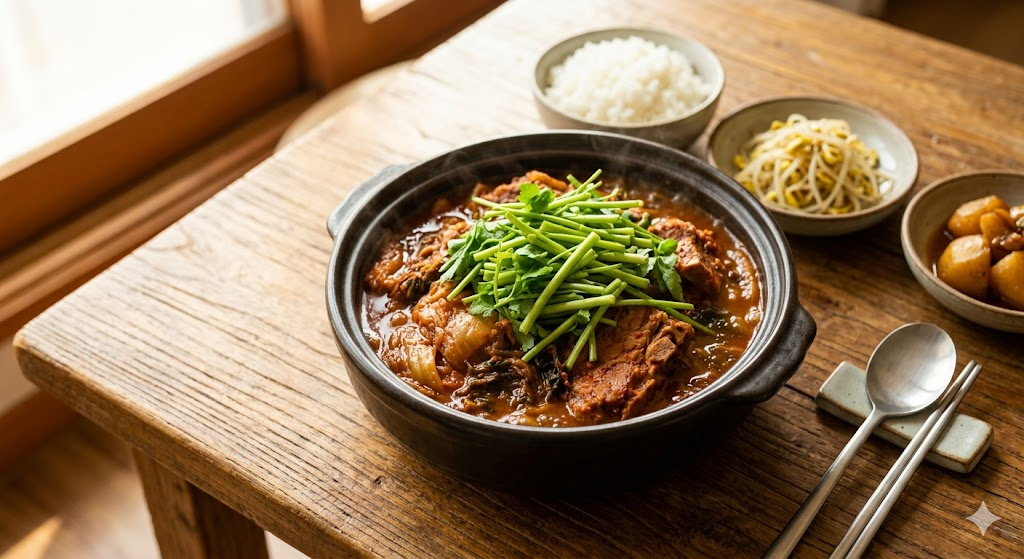
Bring the large pot straight to the table! The contrast between the green Minari and the red kimchi is so appetizing that it’ll make your mouth water just looking at it. Finish with a sprinkle of toasted sesame seeds.
I highly recommend serving this with freshly cooked white rice and a mustard dipping sauce for the meat (Mix 2 parts soy sauce, 1 part vinegar, 0.5 parts sugar, and a dash of hot mustard). Pair it with a cold beer or a glass of Makgeolli (Korean rice wine), and all your stress will melt away!
💬 Final Review & Storage
This was truly a meal that made me think, "This is why I cook!" Wrapping a piece of tender meat in the soft, cooked kimchi made two bowls of rice disappear in an instant. Specifically, the aromatic scent of the Minari cut through the richness of the pork, keeping the palate clean and making it impossible to stop eating.
Keep any leftovers in an airtight container in the fridge and reheat the next day with a little splash of water. And whatever you do, don't forget to make fried rice with the remaining broth using some seaweed flakes and sesame oil! That's not an option; it's a requirement. I’m planning to make this again when my parents visit next weekend. I hope you all create a happy dinner table tonight with this hearty backbone stew!