Crunchy Korean Radish Salad (Mu-saengchae): A Restaurant Secret Revealed! - Korean Food
🥢 Crunchy, Appetite-Boosting Mu-saengchae: Revealing a Restaurant Owner's Secret! Hello everyone!
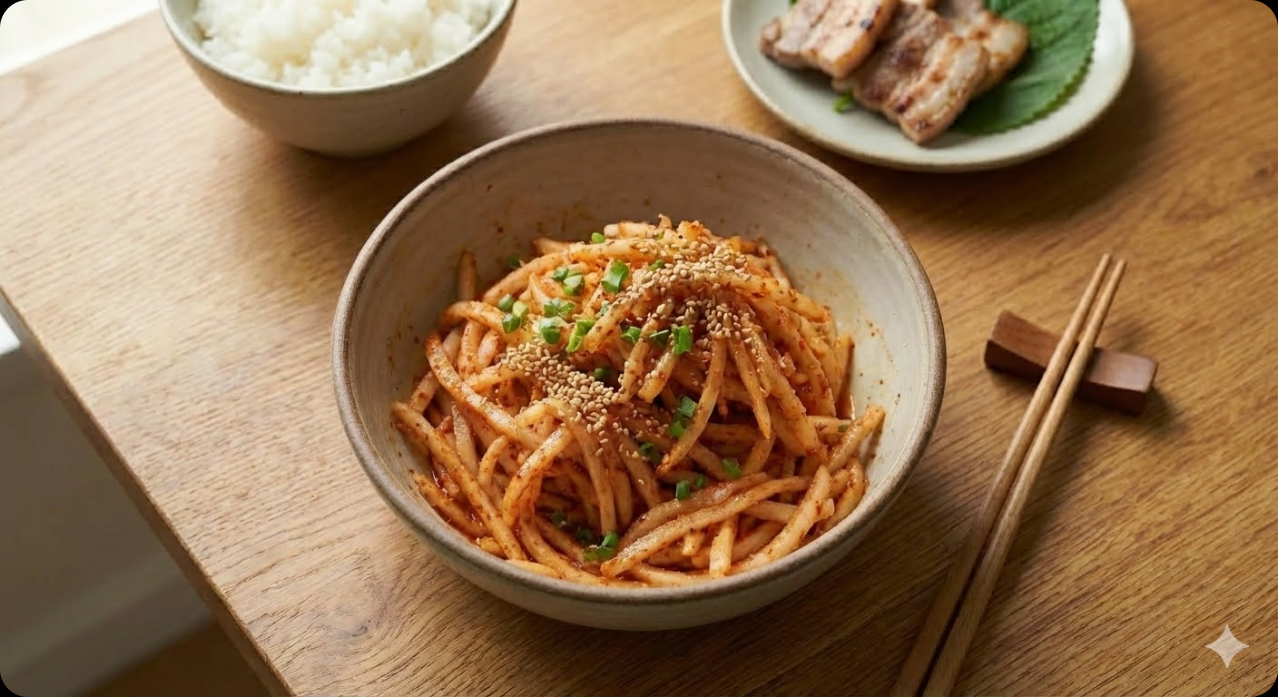
🥢 Crunchy, Appetite-Boosting Mu-saengchae: Revealing a Restaurant Owner's Secret!
Hello everyone! The weather seems to be warming up, but it's still surprisingly chilly, isn't it? At times like this, I crave fresh side dishes that really wake up my taste buds. A few days ago, I had a Korean BBQ party with friends, and the Mu-saengchae (radish salad) I whipped up was an absolute explosion of popularity! My friends kept asking, "Did you buy this from a side dish store?" and begged for the recipe, so today I'm going to share my secret method with you all.
Honestly, Mu-saengchae looks really simple to make, but often it ends up too watery or the seasoning doesn't stick to the radish. I used to have that problem too, but after applying a tiny tip I casually learned from a regular restaurant owner, it completely changed! If you just follow today's Mu-saengchae recipe, you'll easily finish a whole bowl of rice. Let's start now!
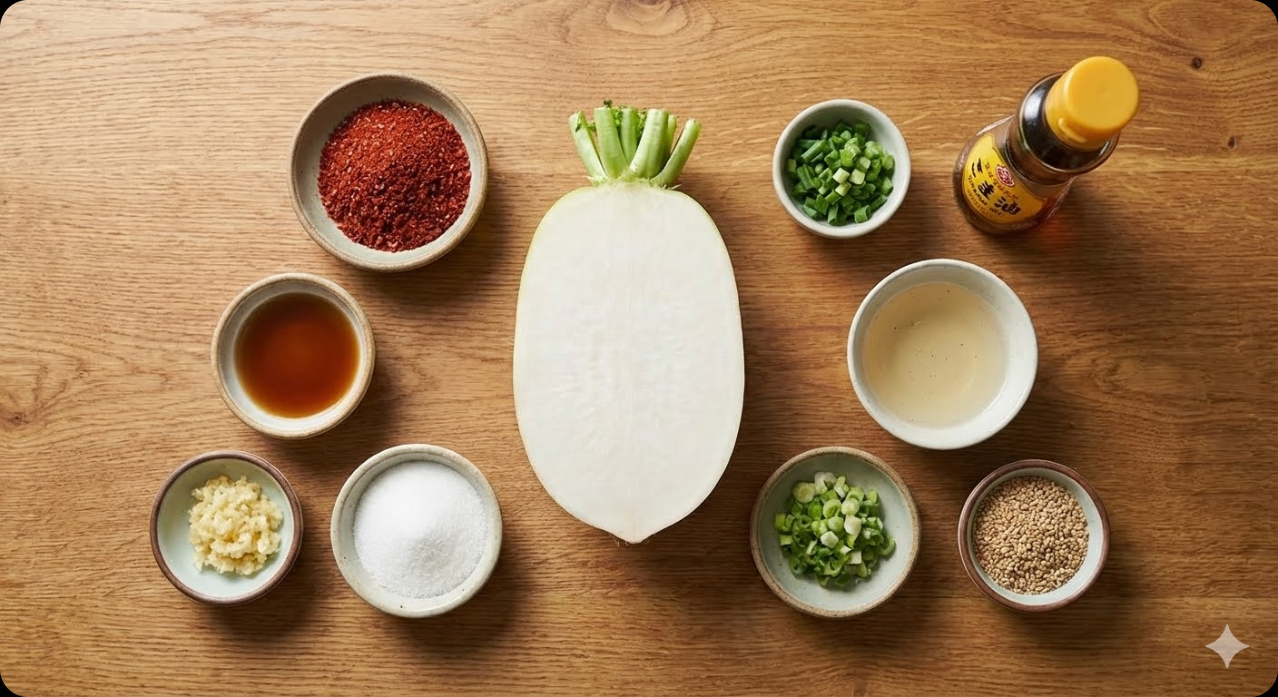
🛒 Ingredients Preparation (Based on 2 servings)
The key to Mu-saengchae is definitely fresh 'mu' (Korean radish)! These days, if you go to the mart, you see many autumn/winter radishes with large green tops. That green part is sweeter, making it perfect for fresh salads.
- Essential Ingredients: 500g Korean radish (about half a medium-sized radish), 1/3 stalk green onion (daepa)
- Seasoning Ingredients: 3 tablespoons Gochugaru (Korean chili flakes), 2 tablespoons fish sauce, 1.5 tablespoons sugar, 1 tablespoon minced garlic, 2 tablespoons vinegar, 1 tablespoon plum extract (maesil-cheong), a sprinkle of sesame seeds
- Optional Ingredients: Small green onions/chives (for garnish), coarse sea salt (for brining)
💡 Cooking Tip! When choosing a radish, pick one that feels heavy when lifted and has no blemishes on the surface. The top part of the radish (the green part) is sweet and good for fresh salads, while the bottom part (the white part) has a pungent kick, making it good for soups or braises! Try actively using the green part for this home-cooked meal menu.
👩🍳 Cooking Process
Step 1. Julienne the Radish & Pre-season
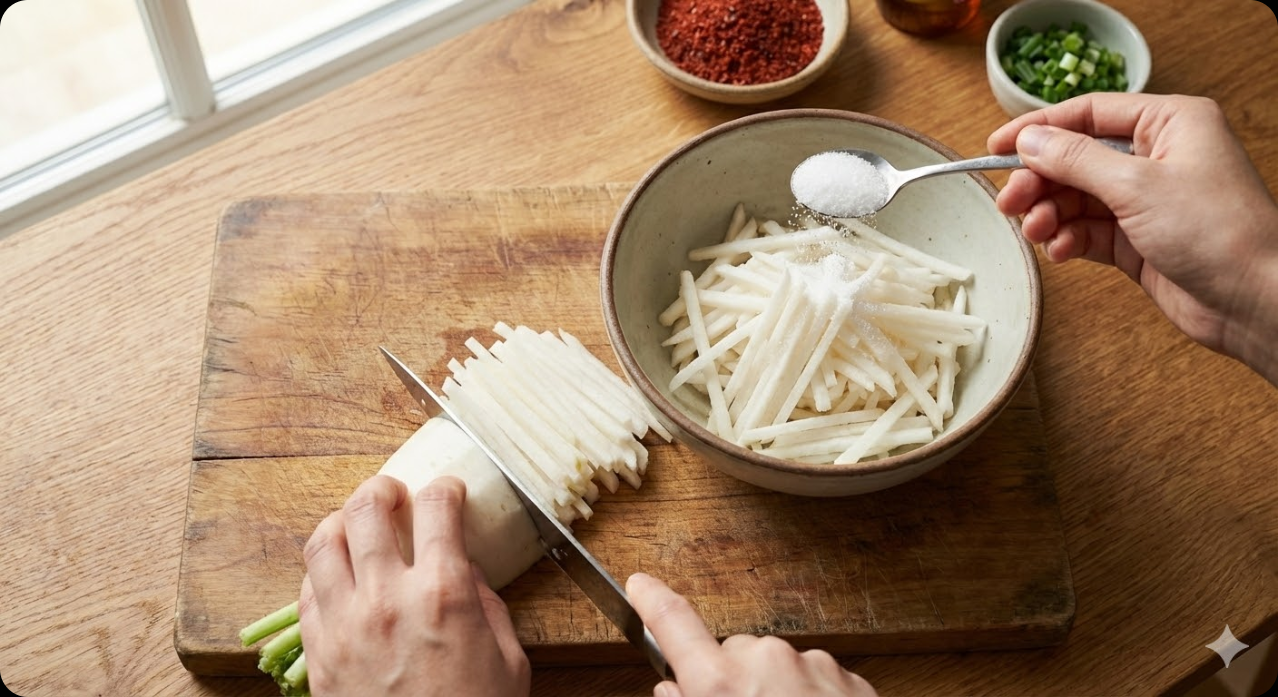
First, wash the radish cleanly, peel off the skin slightly, and julienne it into strips about 0.3~0.5cm thick. If it's too thin, there's no chewiness, and if it's too thick, it won't absorb the seasoning well. My first secret is to add 1 tablespoon of sugar to the julienned radish first and let it sit for about 10 minutes! If you add sugar before salt, the sweetness penetrates deep into the radish, making it much more savory.
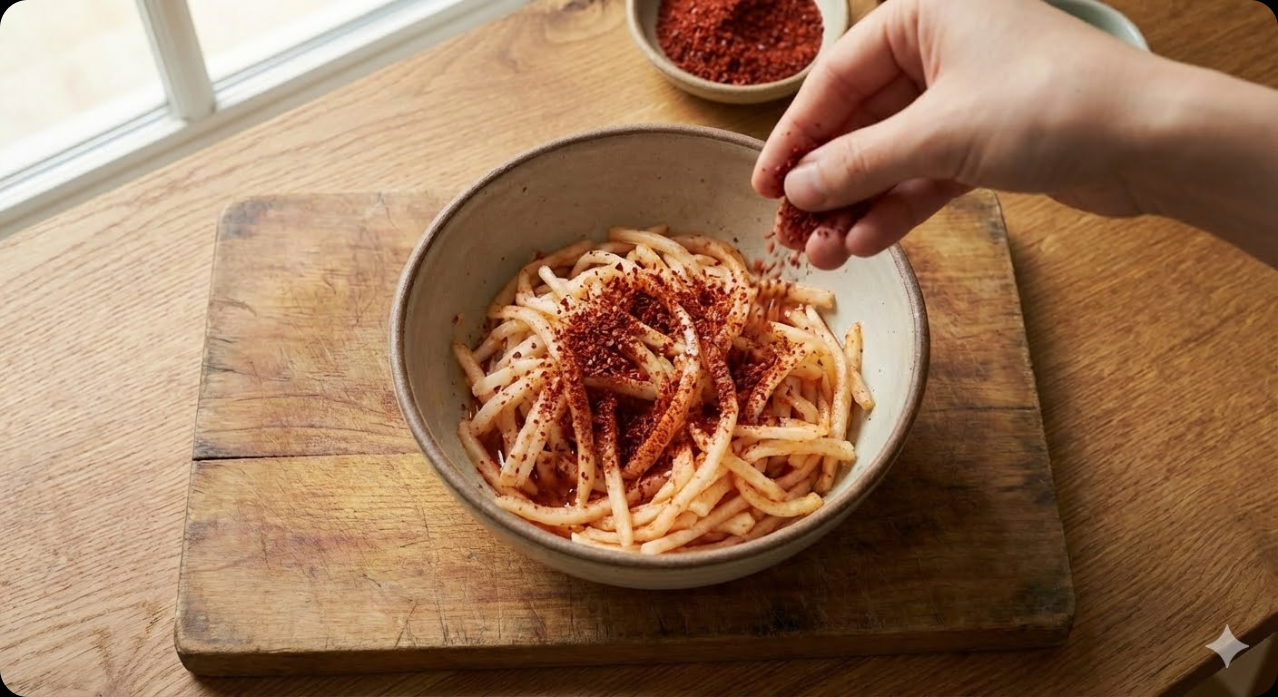
Step 2. Coat with Gochugaru (Chili Flakes)
Slightly drain the water that came out of the salted radish (don't throw it all away, it tastes good!), then add 3 tablespoons of gochugaru first and mix. You need to color it with gochugaru first before adding other seasonings so the radish gets a beautiful red color and the seasoning doesn't slide off. This is the most important step in making Mu-saengchae, so please color it thoroughly!
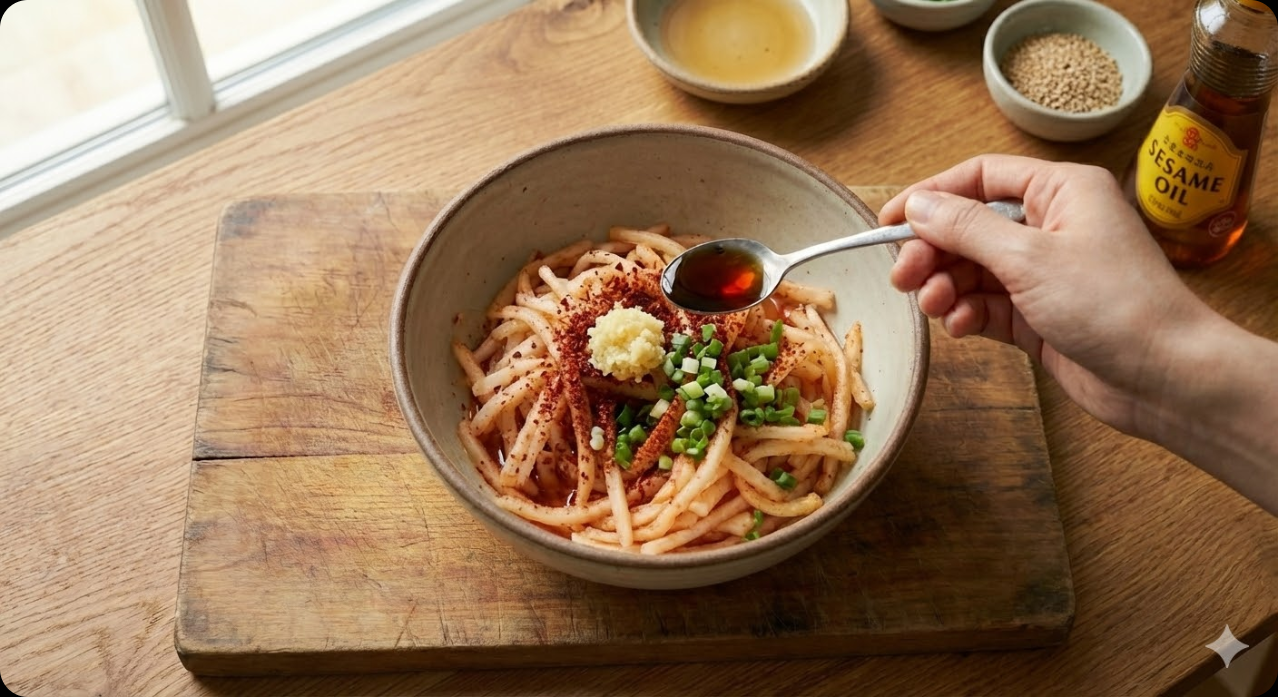
Step 3. Add Seasoning Sauce and Mix
Now add the prepared fish sauce, minced garlic, plum extract, and vinegar. If you like a sweet and sour taste, try adjusting the amount of vinegar slightly. The deep taste of the fish sauce meets the tanginess of the vinegar to create a golden ratio seasoning sauce. At this time, chop the green onion and add it together.
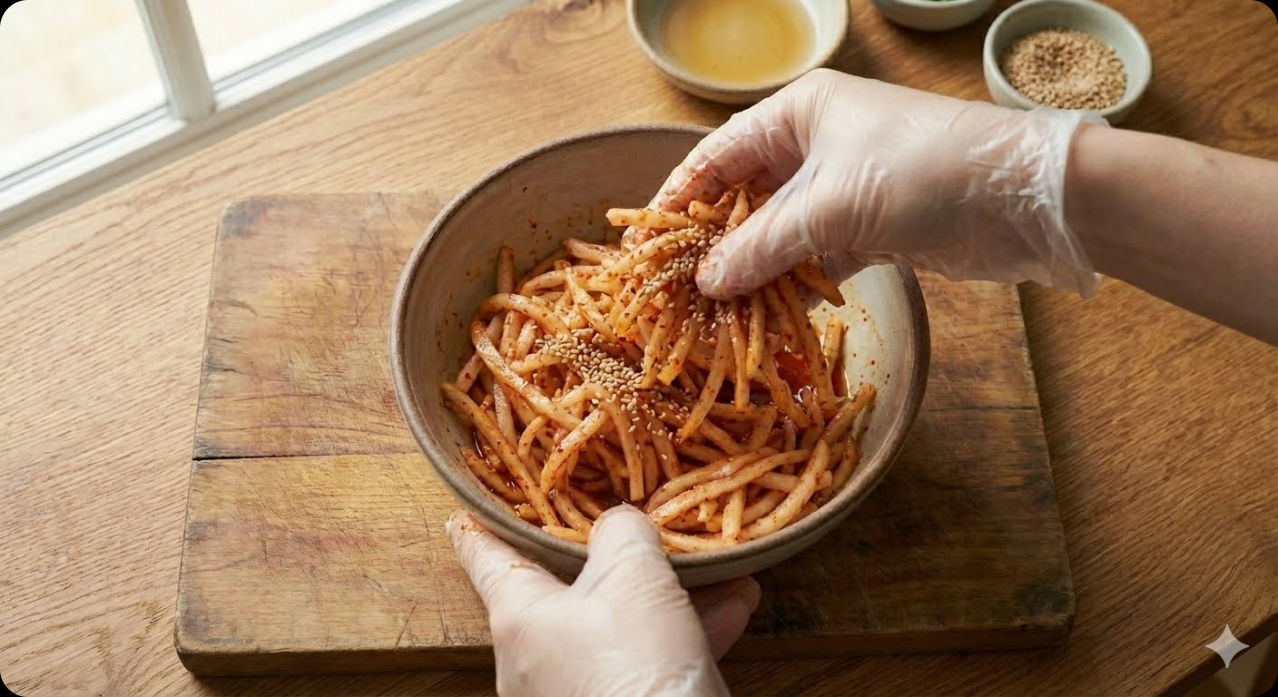
Step 4. Add "Hand Taste" & Finish
Mix firmly with your hands using a kneading motion so the seasoning penetrates the radish evenly. Be careful not to mix too hard or the radish might break! Finally, sprinkle a generous amount of sesame seeds to add nuttiness, and it's finished. Taste it, and if it lacks seasoning, adjust it very slightly with salt.
✨ Plating & How to Eat Deliciously
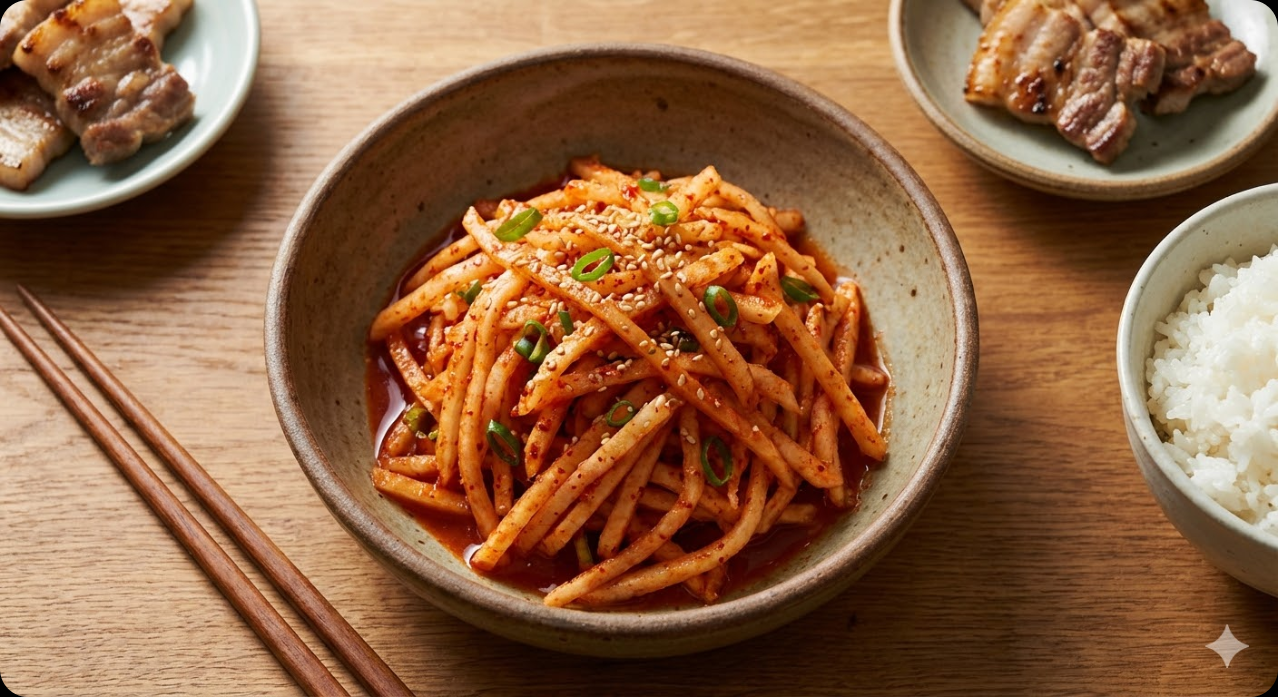
The finished Mu-saengchae looks really pretty if you place it neatly in a bowl and sprinkle some chives lightly on top. It's delicious just piled high on freshly cooked white rice, but the method I recommend most is, of course, Bibimbap! Put a bowl of rice in a nickel-silver pot, add lots of Mu-saengchae, a fried egg, and a drizzle of sesame oil... It's a taste that makes you envy nothing in the world. If you grill pork belly (samgyeopsal) and eat it alongside, it cuts right through the greasiness, so you can keep eating endlessly.
📝 Honest Review and Storage Tips
As you'll know when you make it yourself, it tastes much cleaner and healthier than store-bought Mu-saengchae. If you pre-season with sugar first as I taught you, the pungent taste of the radish disappears and only the crunchiness remains. It's seriously delicious, I think I make it at least once a week!
- Storage Method: Store in an airtight container in the refrigerator. After about 2-3 days, a refreshing brine comes out of the radish; mixing rice into that brine is a real delicacy!
- Caution: It can spoil quickly if left at room temperature for too long, so I recommend taking out only as much as you're going to eat.
The Mu-saengchae I introduced today, it's really simpler than you thought, right? Even cooking beginners will be able to follow along quickly. If you're worrying about side dishes for dinner tonight, take the radish out of your fridge right now! I'll come back next time with an even more delicious and vivid recipe. You should all try making it too~!